The implausible origin of a piece of art
Mark Oros and I are very different from each other; our backgrounds and projections are separated by what seems an intergalactic distance, yet we are old and good friends and frequent collaborators in, for the most part, recklessly unpopular artistic ventures. A couple of years ago, I mentioned to him that my old computer was no longer complying with the demands of my photographic and book-making work. A few days later, he showed up at my place bearing a box and voicing a barter proposal. The box contained a gleaming laptop left behind by a family member who had just acquired a newer version of the same machine. The proposal was to trade it for some of my artwork. While he walked around the studio, looking at what was available, I determined that the MacBook he was offering would amply cover my needs; it was not brand new, but certainly new and powerful enough for me. He left my studio with two or three of my stone poems, somewhat discounted in price because they all had in them components from his collection of fine lapidary material. There was a sticking point to the deal, though; the value of the art he was taking covered only about two-thirds of what he was trading it for. However, we agreed that some future service would take care of what I was left owing him.
I detest being in debt, so after about a year without hearing from him about the issue, I pressed him to come up with whatever job I could do for him that would close the gap. (By then, I had used the computer to write the texts for two of my books and to process far more photos than I can count.) Not long after, he showed up at my door again, bearing another box and a new proposal. The box contained a large set of semi-precious material: cut slabs, and still-untouched specimens: agates, jaspers, fossils, minerals and gemstones from Hashnu Stones & Gems, his lapidary collection and business. The idea was to settle the debt by creating a piece of art for him using this material. A further, and as far as I’m concerned, very smart stipulation was that my dear life companion and partner in crime, Kim Schrag, would be in charge of the design of the artwork. She would be separately remunerated for her part in the collaboration. In other words, my debt would be settled through the work involved in giving final form to whatever design resulted from her assessment and treatment of the material he was providing. At that point, none of us had a clue what we were getting into with this peculiar arrangement.
The design stage, and the cutting, shaping, faceting, carving, and polishing of the components for the piece, as proposed by Kim’s design
After living for some time with the treasures provided by Mark, Kim selected the slabs and stones that she preferred and produced some drawings suggesting the general form the piece would take. Two important decisions had been made beforehand: First, that the central inspiration for the piece would come from plants and flowers (an unsurprising choice, given that both Kim and Mark are avid gardeners), and, second, that Mark would cut and shape the materials in accordance with Kim’s evolving requests.
(When viewing galleries that exhibit two or more images, please click on them to see a larger version.)
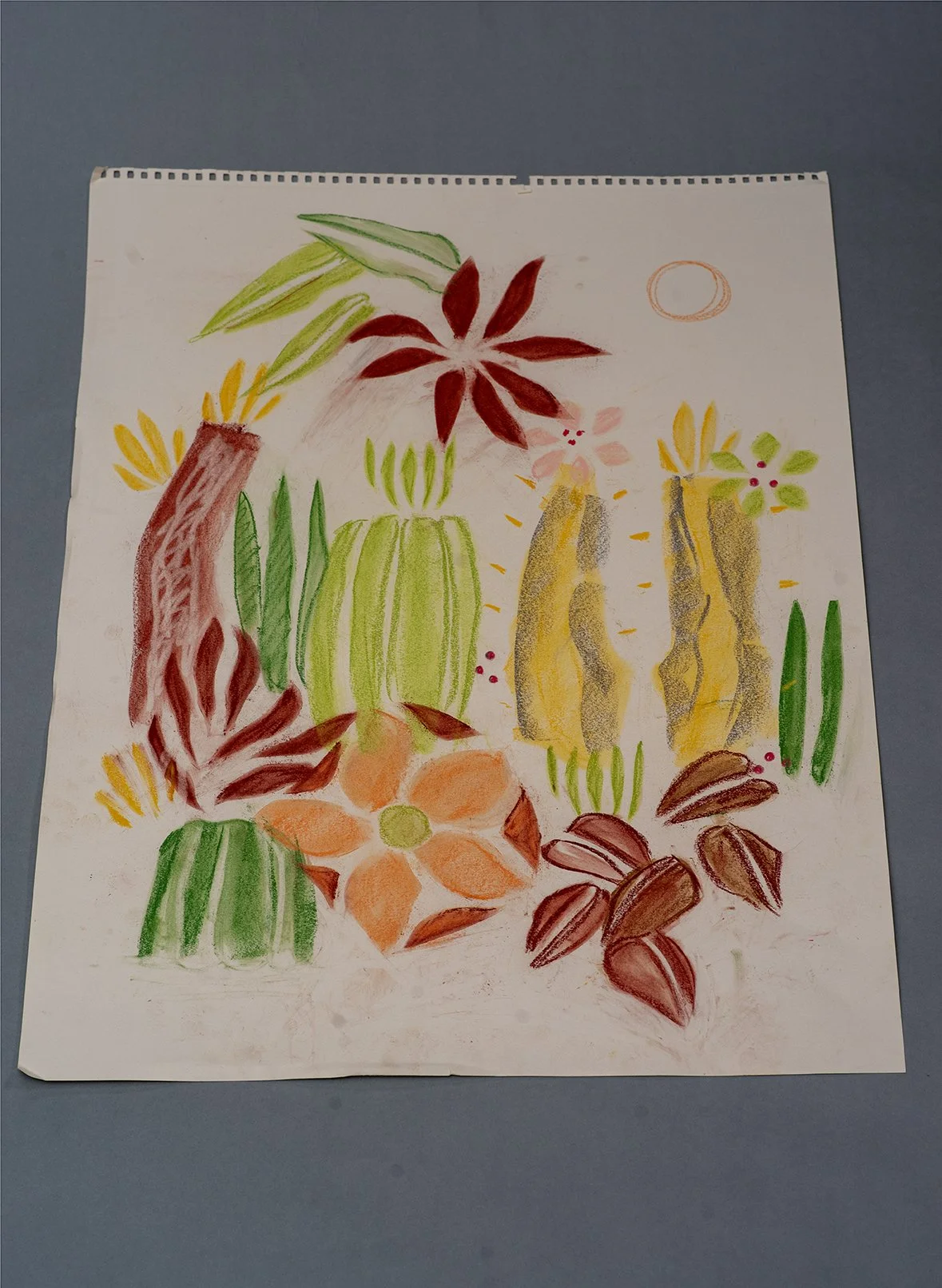
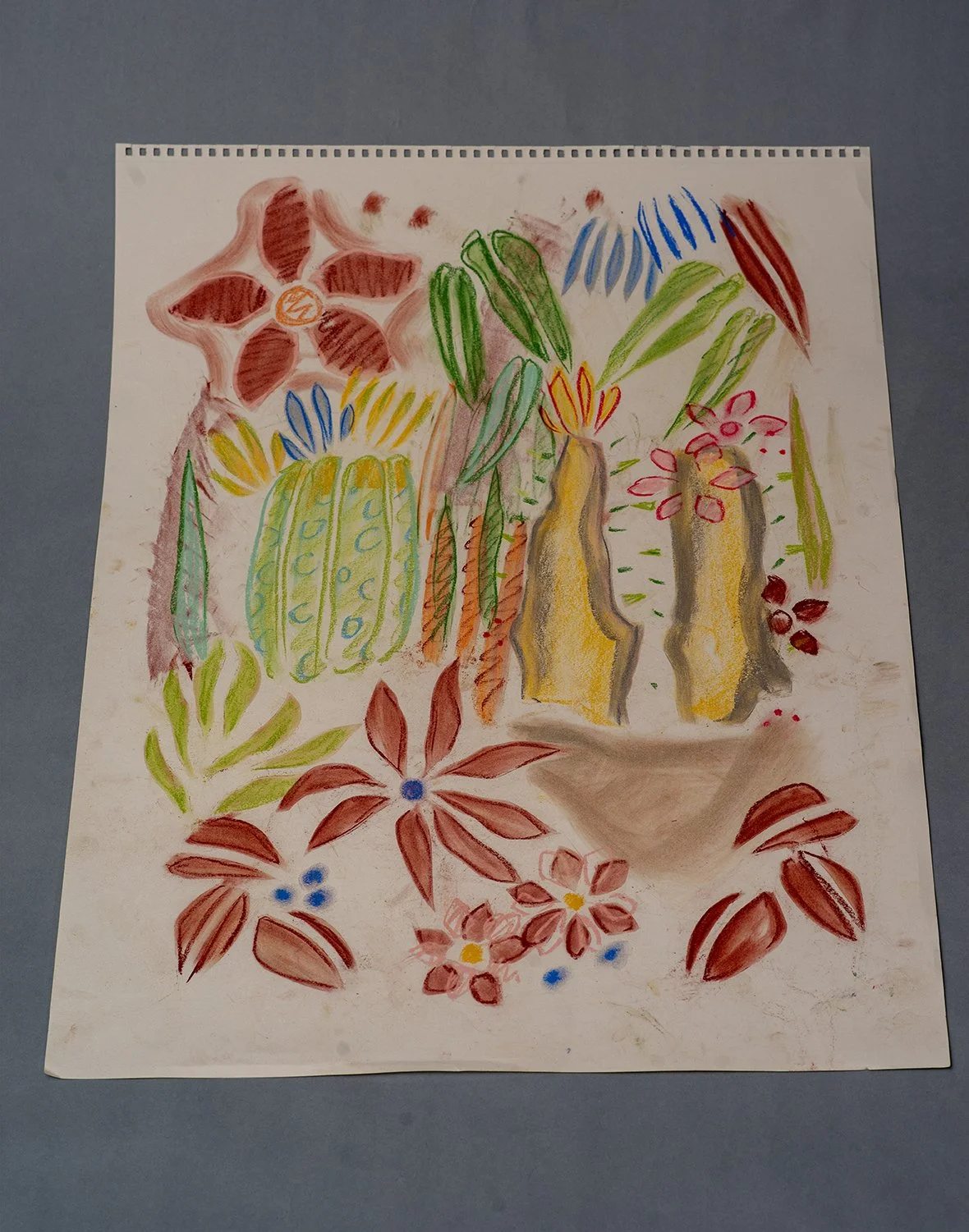
Mark loved her initial projections, which led to a second stage in her design work. It involved drawing and cutting stencils indicating the exact size and shape of the components that would result from contour shaping each selected slab and from slicing and facetting some of the yet entirely unprocessed chosen stones.
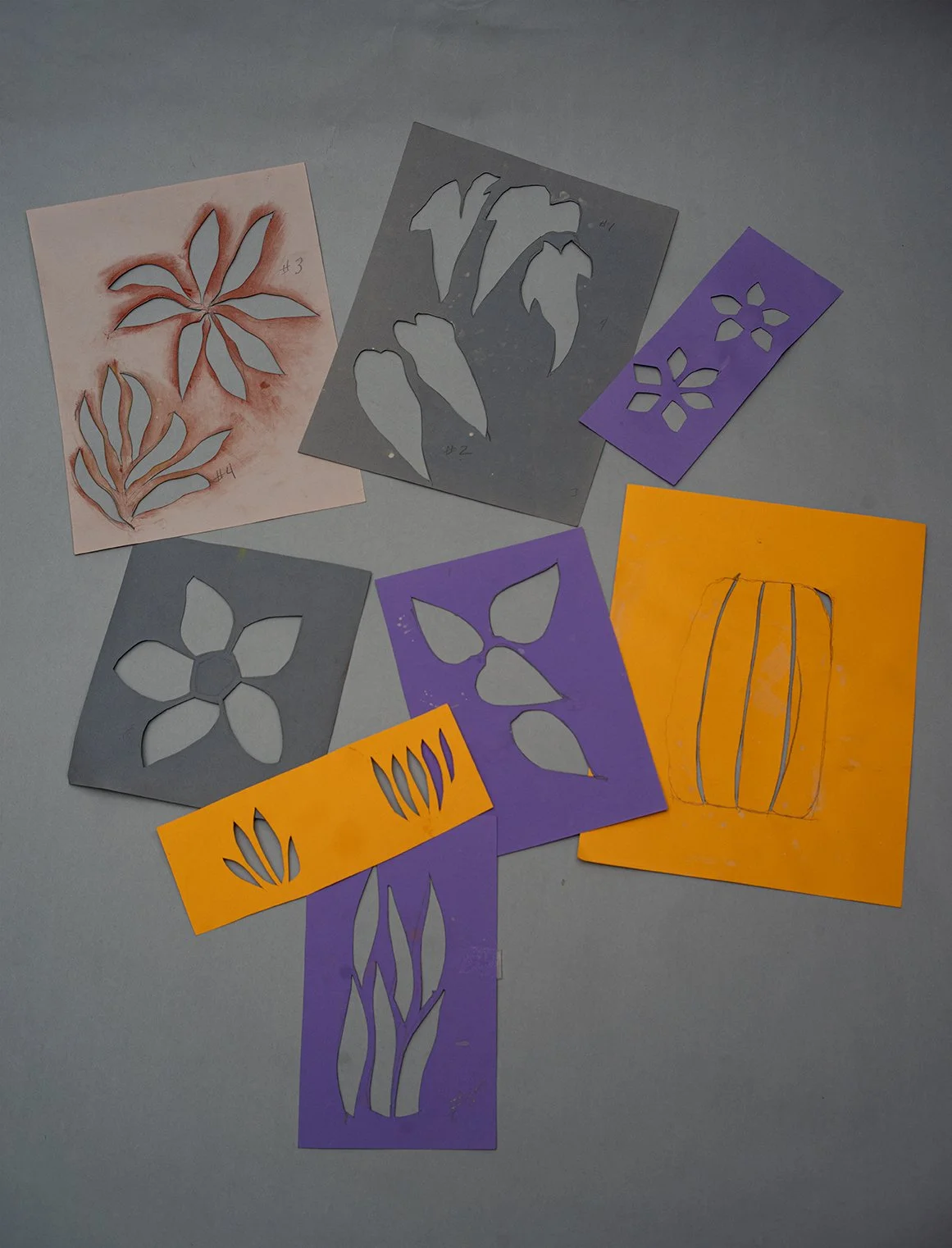
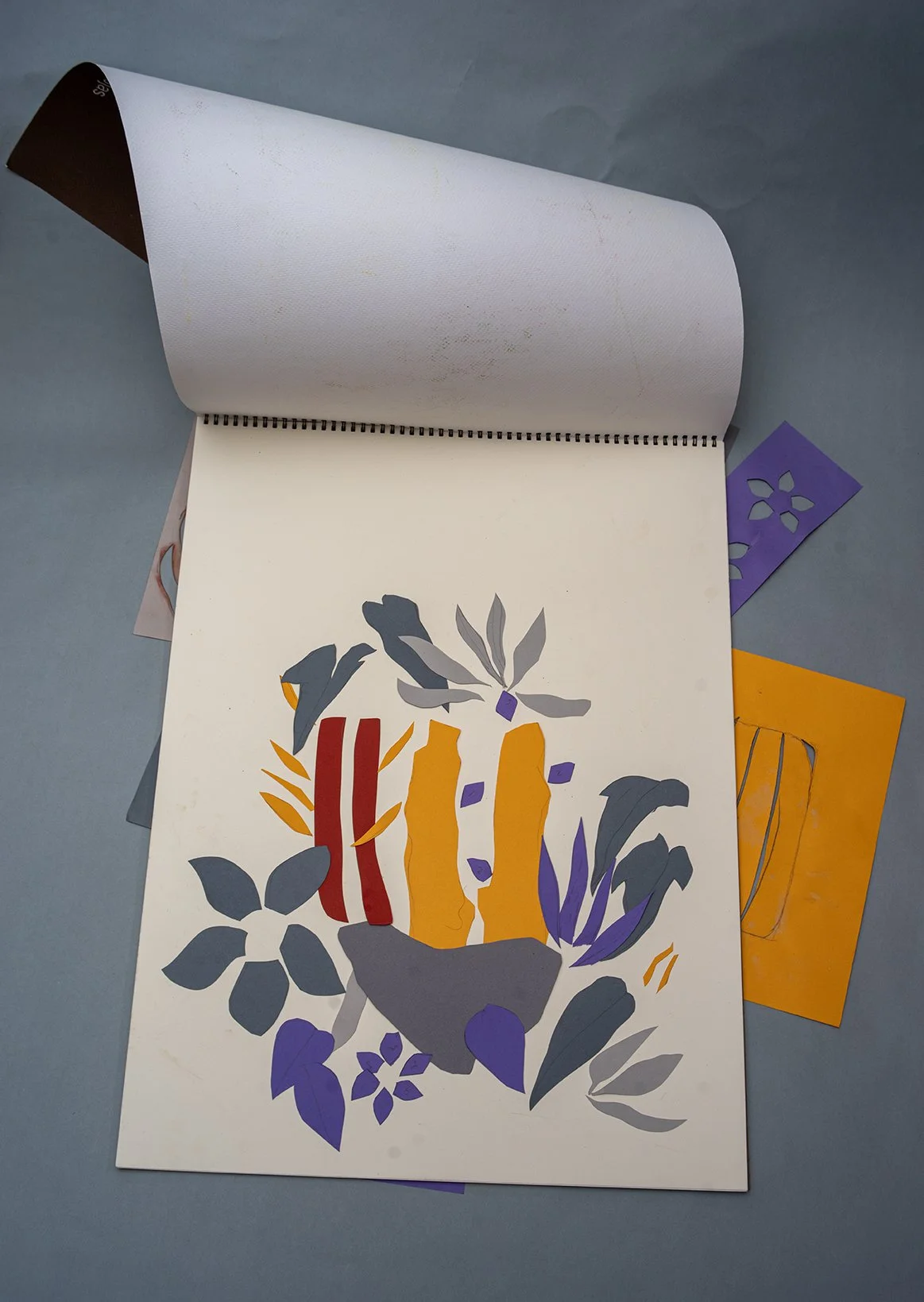
The general design remained flexible during this stage as it involved several consultations and the consideration of other specimens. In the end, Kim produced new drawings using her stencils. The approval of the last of these drawings marked the beginning of the longest and most laborious stage of the entire project, which took place entirely at Mark’s Trumansburg studio. Michael Rizzo, a veteran and excellent lapidary artist (and Mark’s main assistant), and Reese Mount, a young, enthusiastic, and very talented apprentice, joined him over many months of intermittent work, turning the raw material into the perfectly shaped and polished components that would later be assembled into a lasting piece of art.
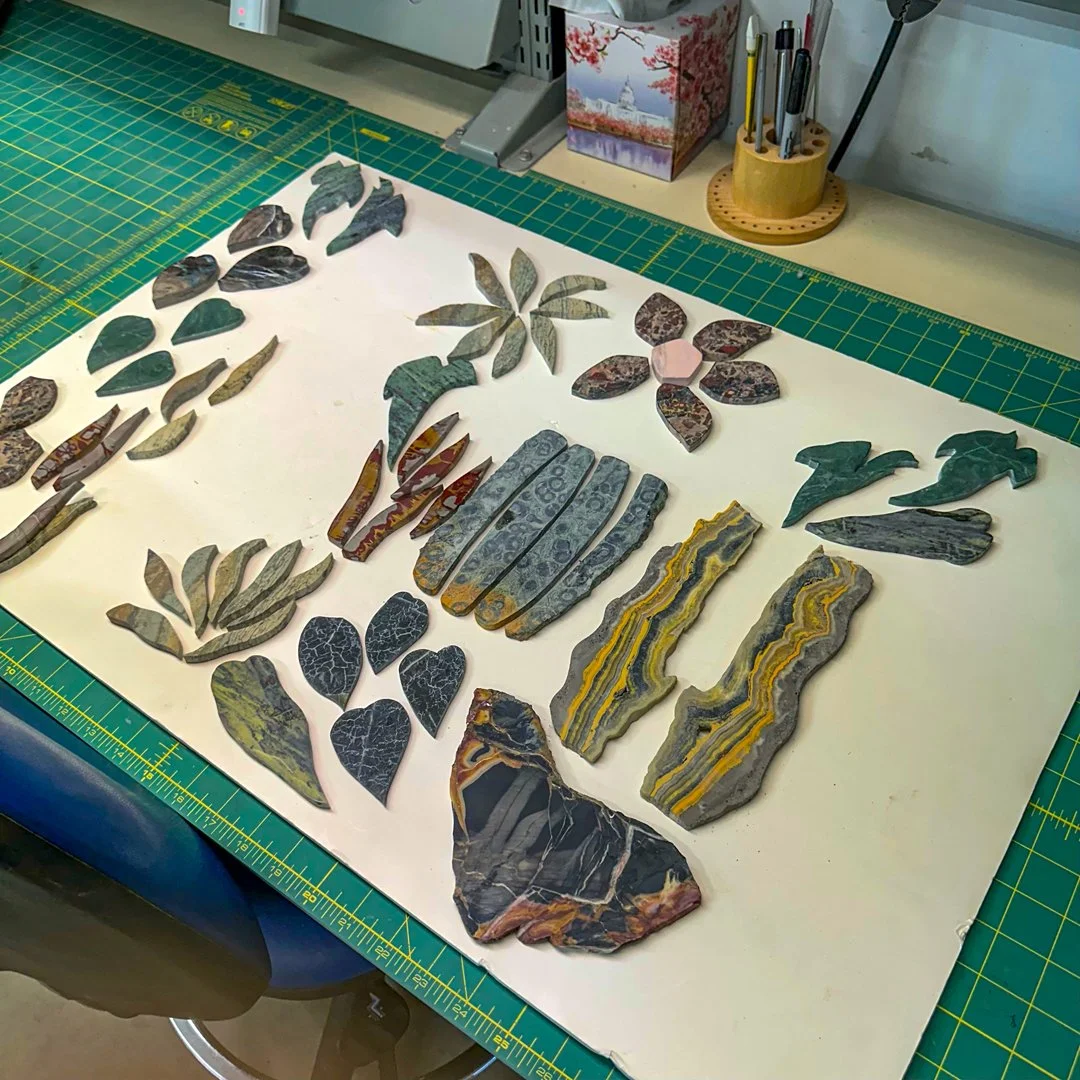
Here are some of the photos that Mark took along the long period during which the stones were cut, given shape (some of them, texture as well), and finally polished to a perfect glow and color rendition. Reese Mount is the star lapidary artist here.
Please click on the thumbnails to see enlargements.
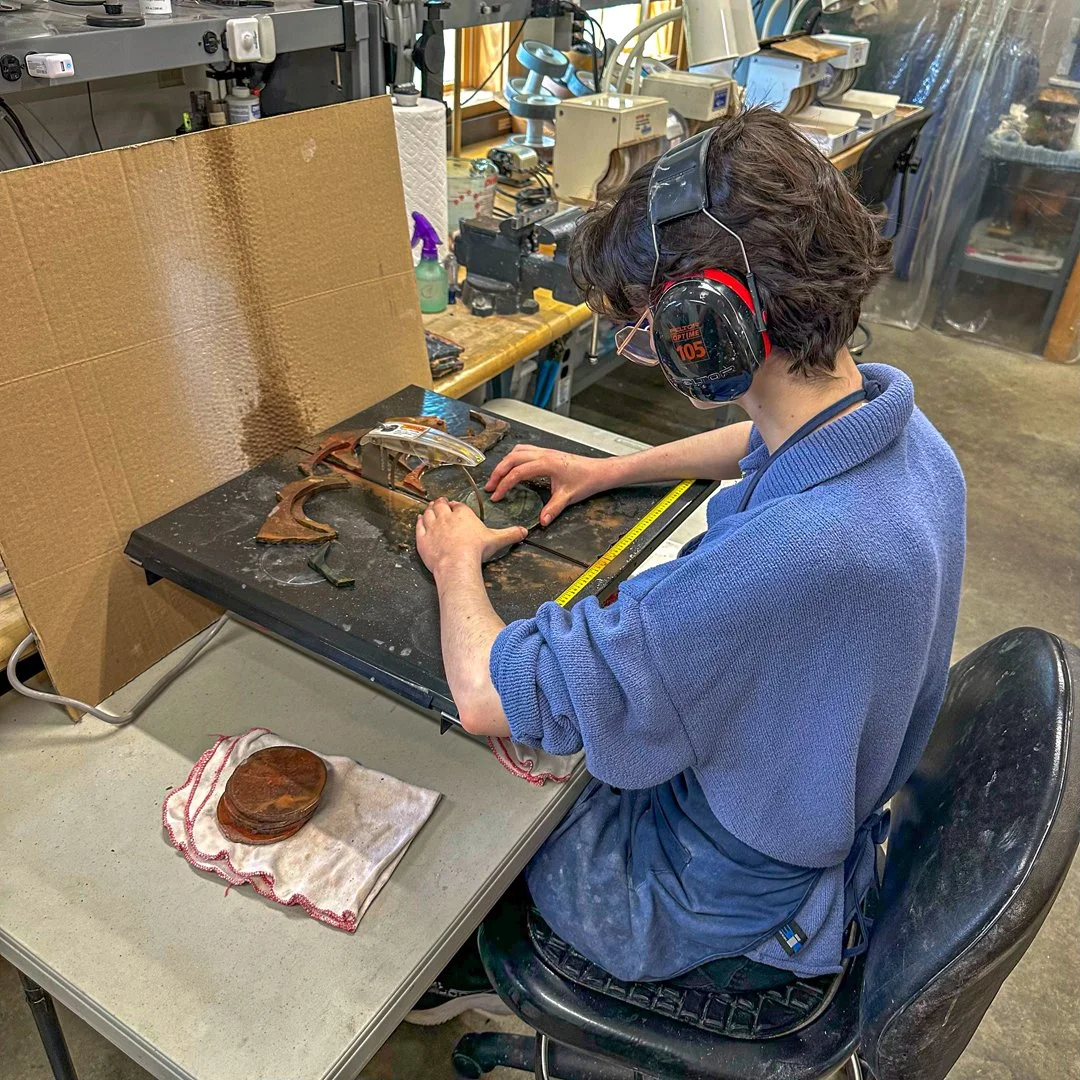
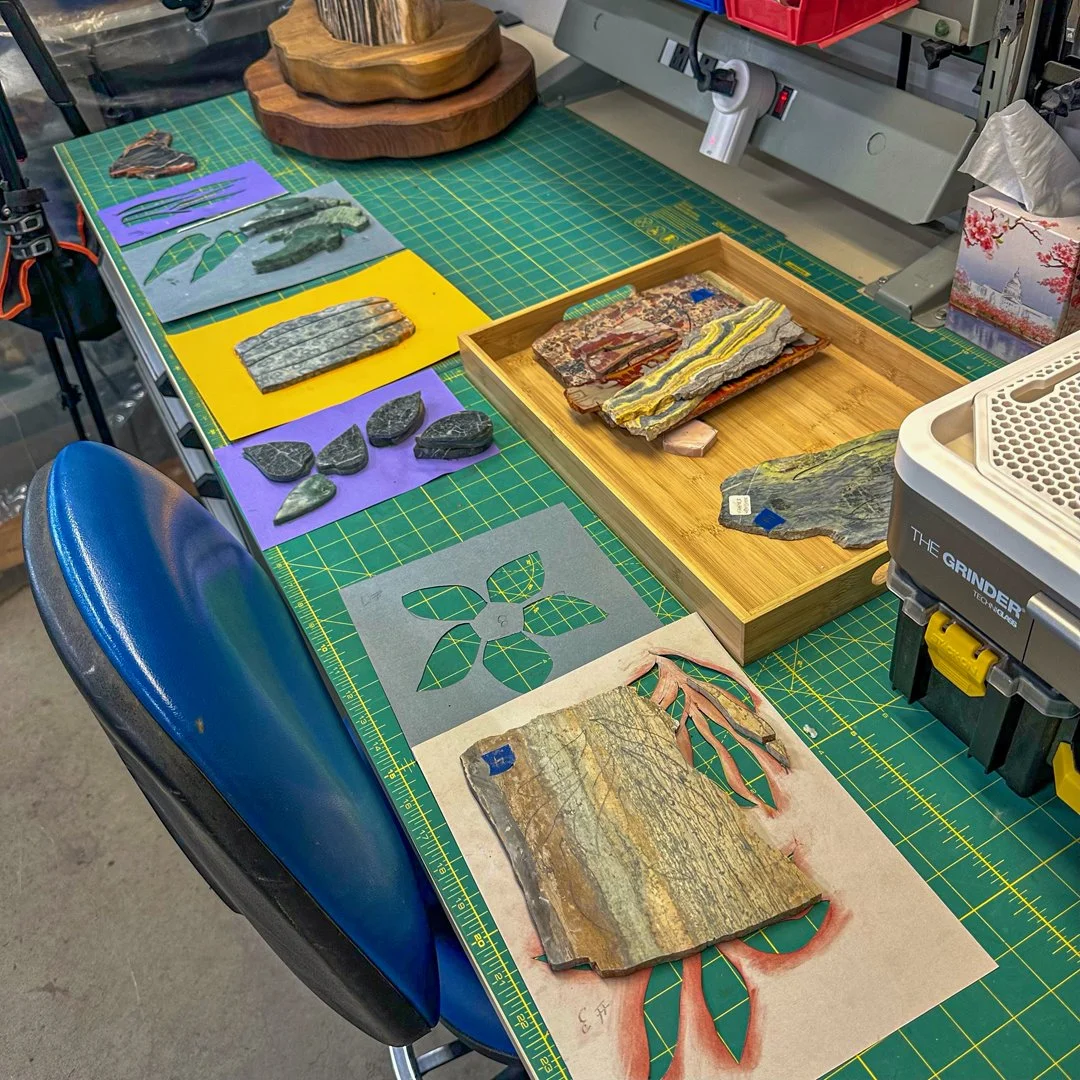
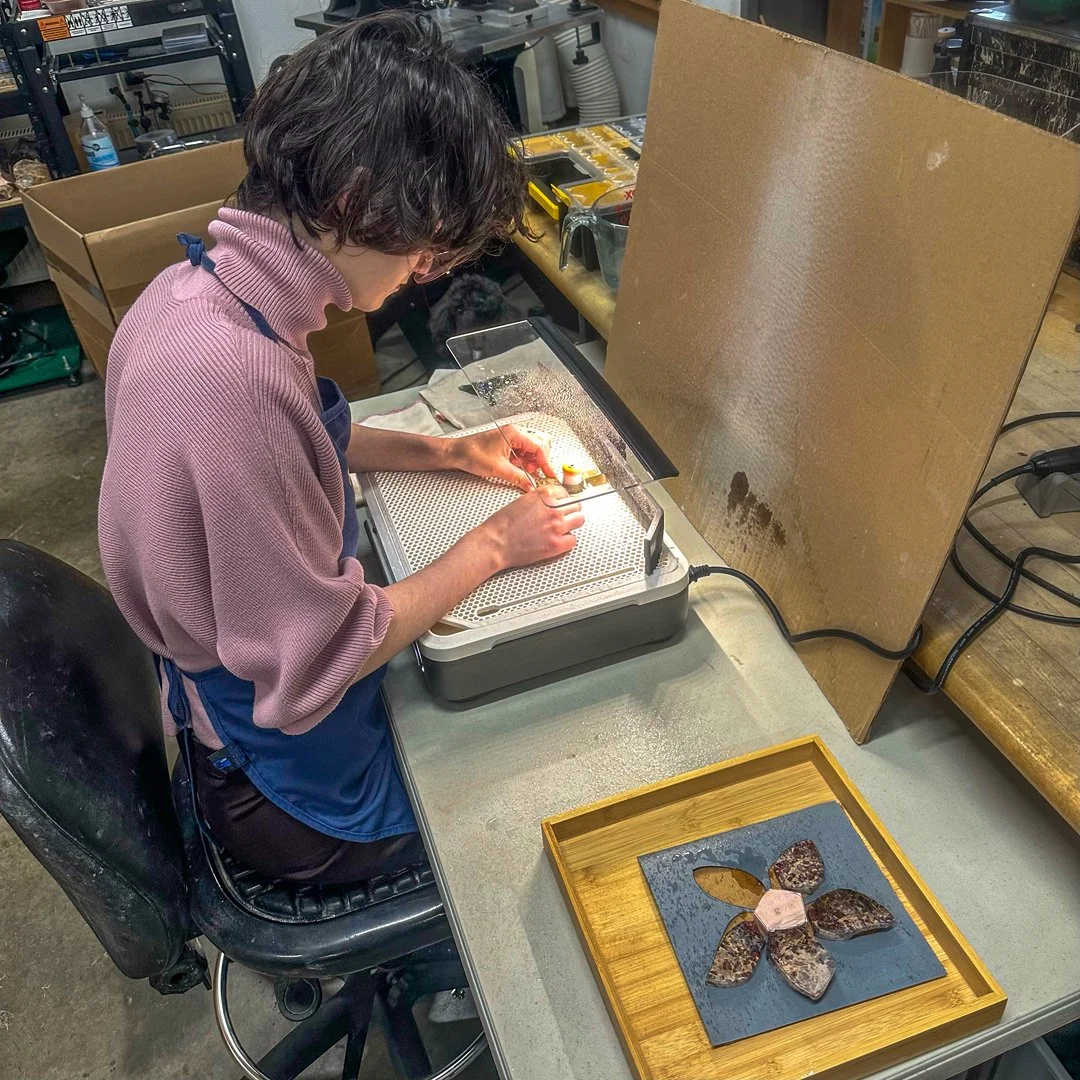
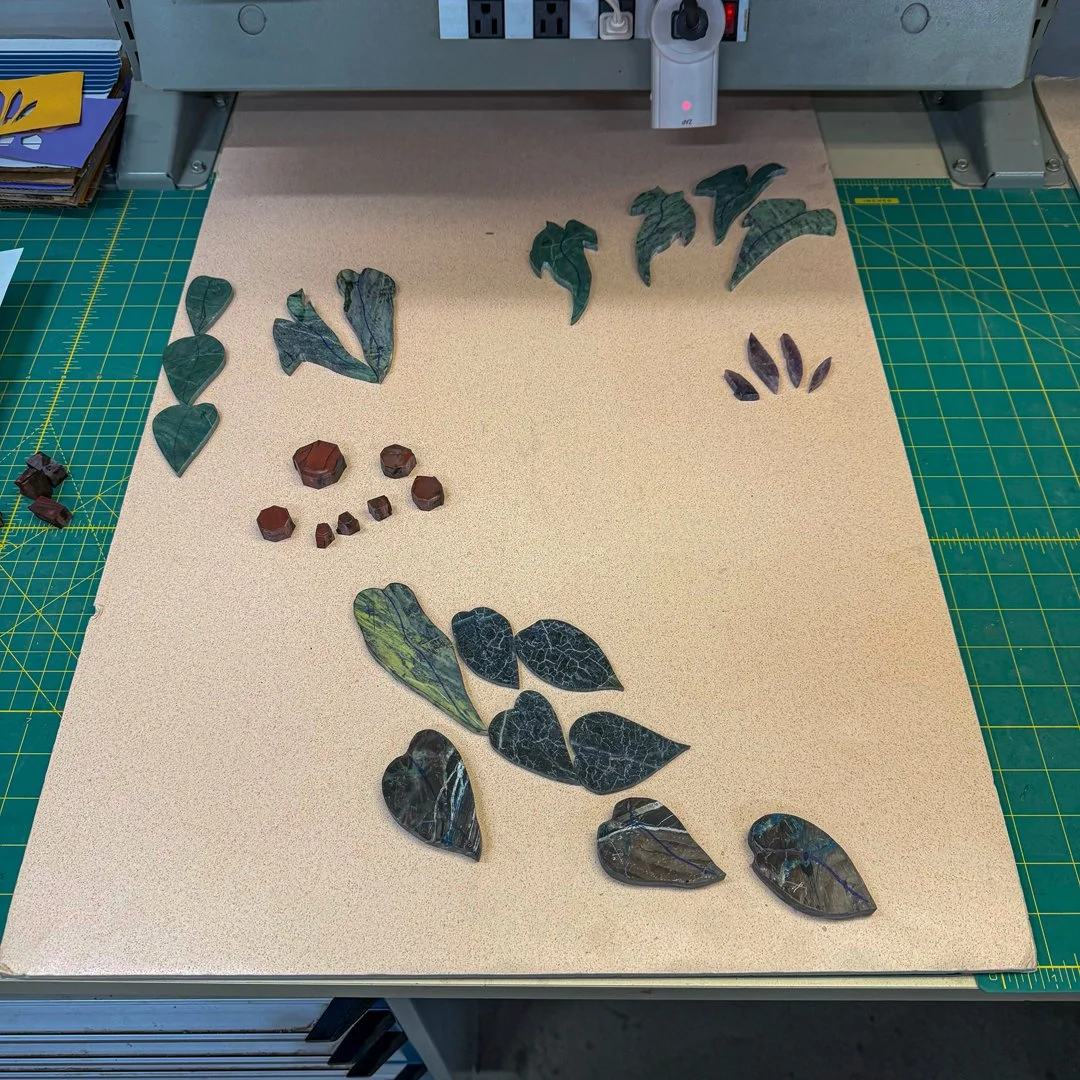
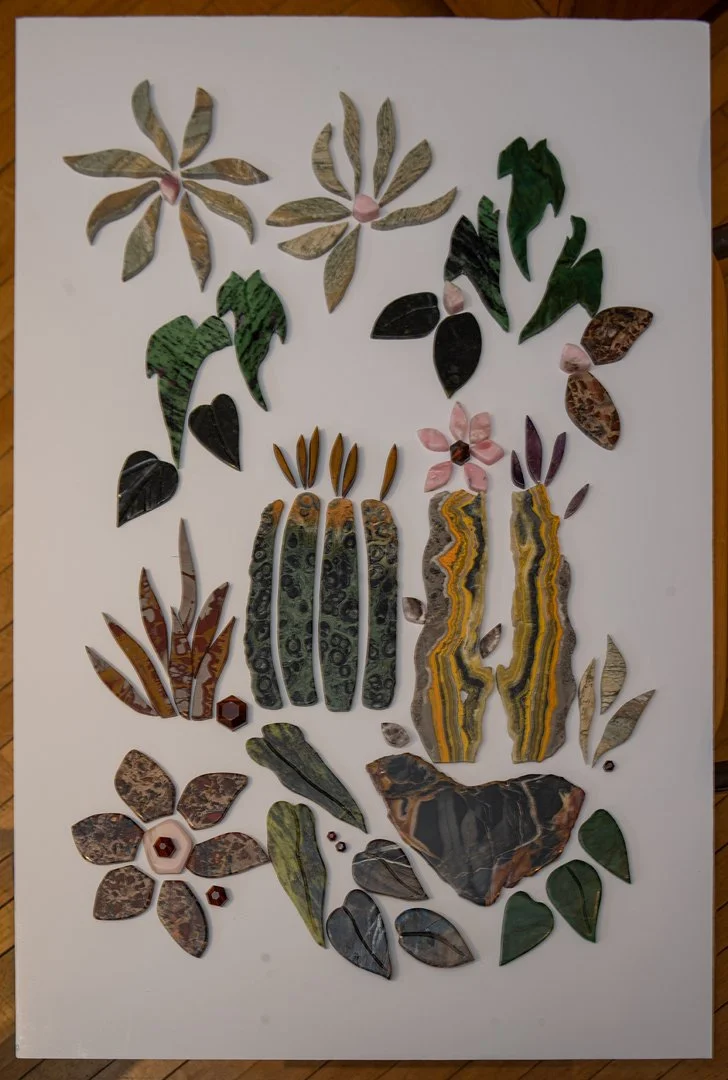
At the beginning of the new year, Mark brought over to our home-studio the delicately processed components that would go into the final piece, Kim arranged them on a piece of board, and Mark approved of the photograph I made of that provisional vision. In the final staging of the piece, Kim and I engaged in, at times, testy negotiations regarding changes in its ultimate abstract/representational volume. The restrictions and possibilities offered by the ultimate turning of the materials into a piece of wall art had brought new design options at the tail end of the process. I suggested adding high-relief stems for three of the flowers and low-relief side-to-side cuts on the board to help the piece gain some sense of depth. We spent hours moving the pieces set on a dummy panel, sometimes just millimeters. We finally agreed on what seemed a good abstract/representational solution. We invited Mark to come take a look, and he loved the outcome of our now joint proposal.
Below are images of a preliminary and the final design proposals.
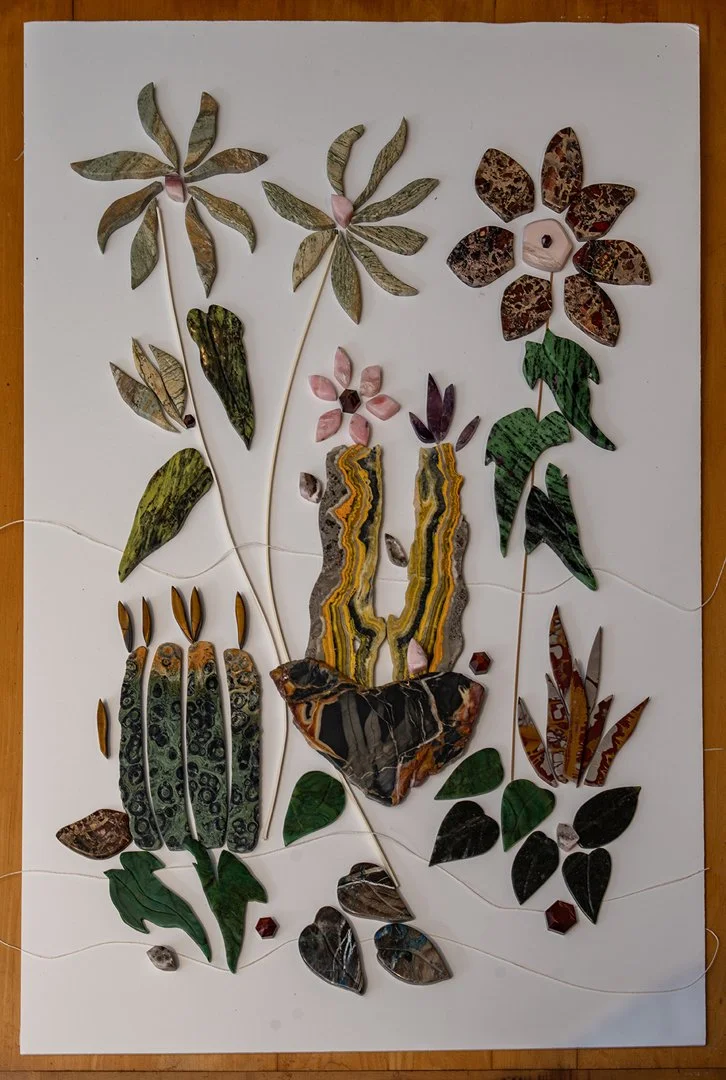
The final setting of the 88 components on a fully-lined panel and frame
What follows is the transcription of the 4 progress reports I sent to Mark and his assistants during the final two weeks of this peculiar project.
First Progress Report
Hello, Mark,
Work on the piece has suddenly accelerated with the coming of the new year. Here are some process pics. Please share with the other accomplices.
The multi-layered float panel has been completed, and Kim is seen here moving the stone elements from the dummy to it. This placement will guide the longest and hardest task of this last stage of the project: carving the panel to allow the precise embedding of each component.
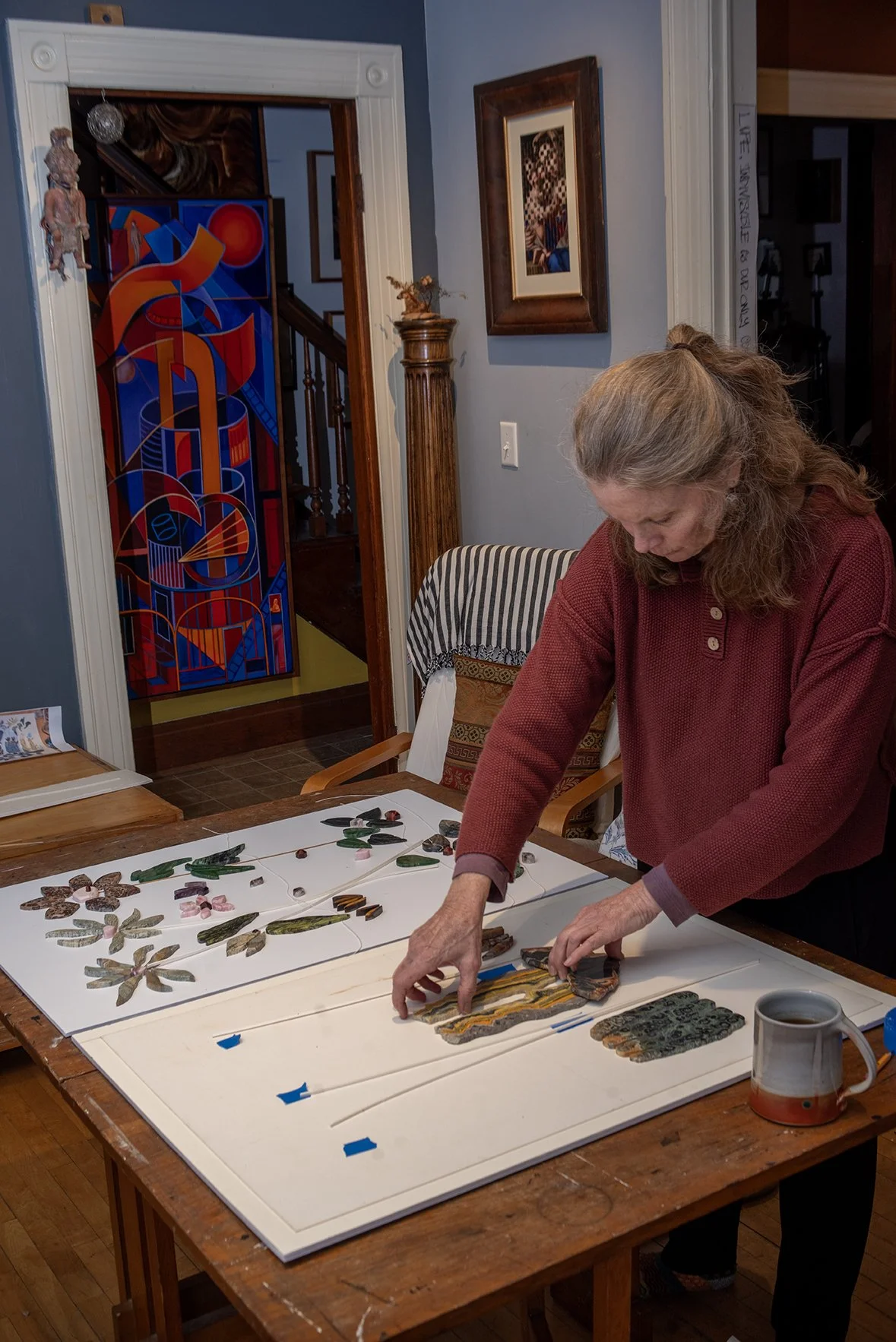
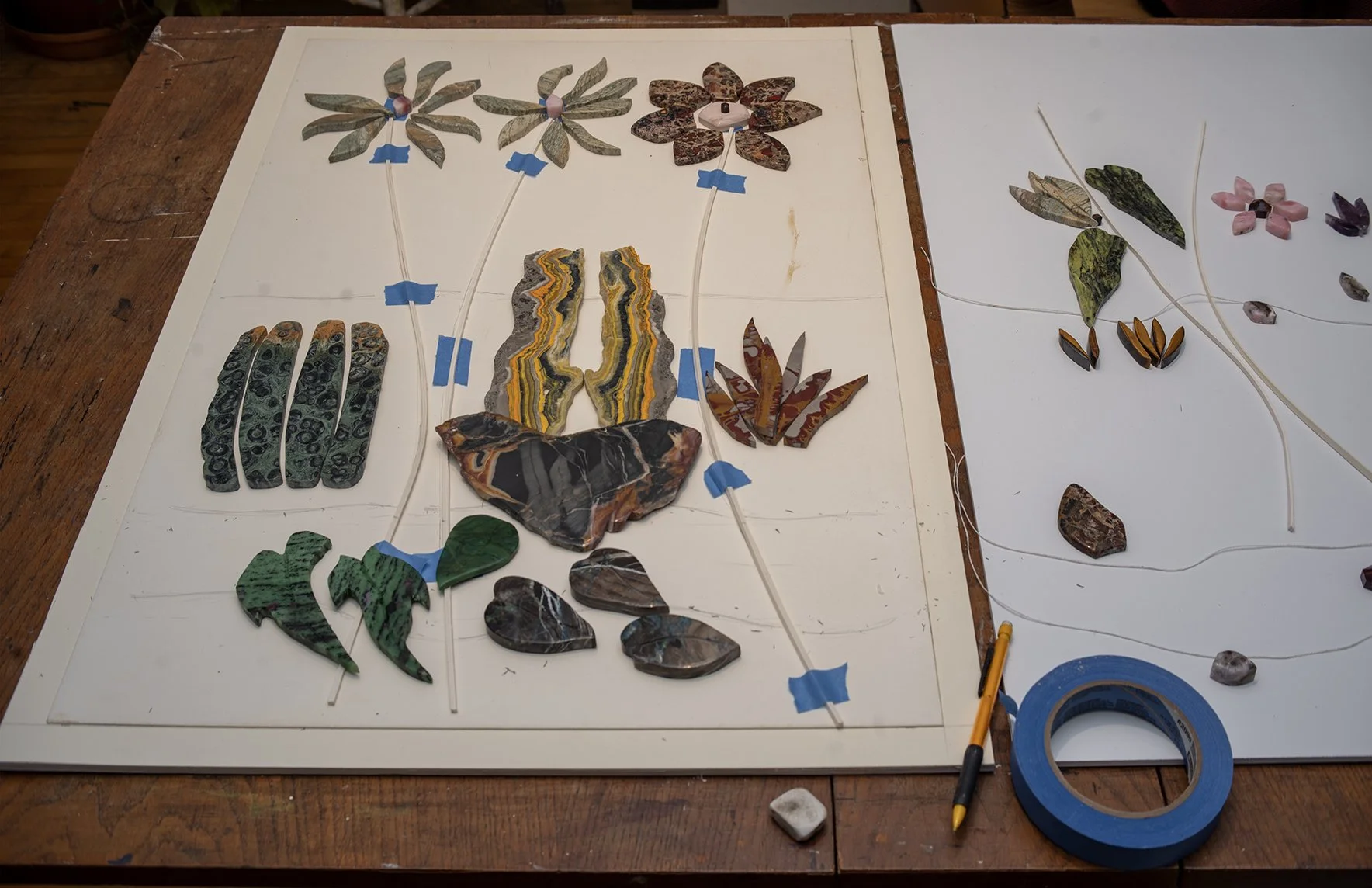
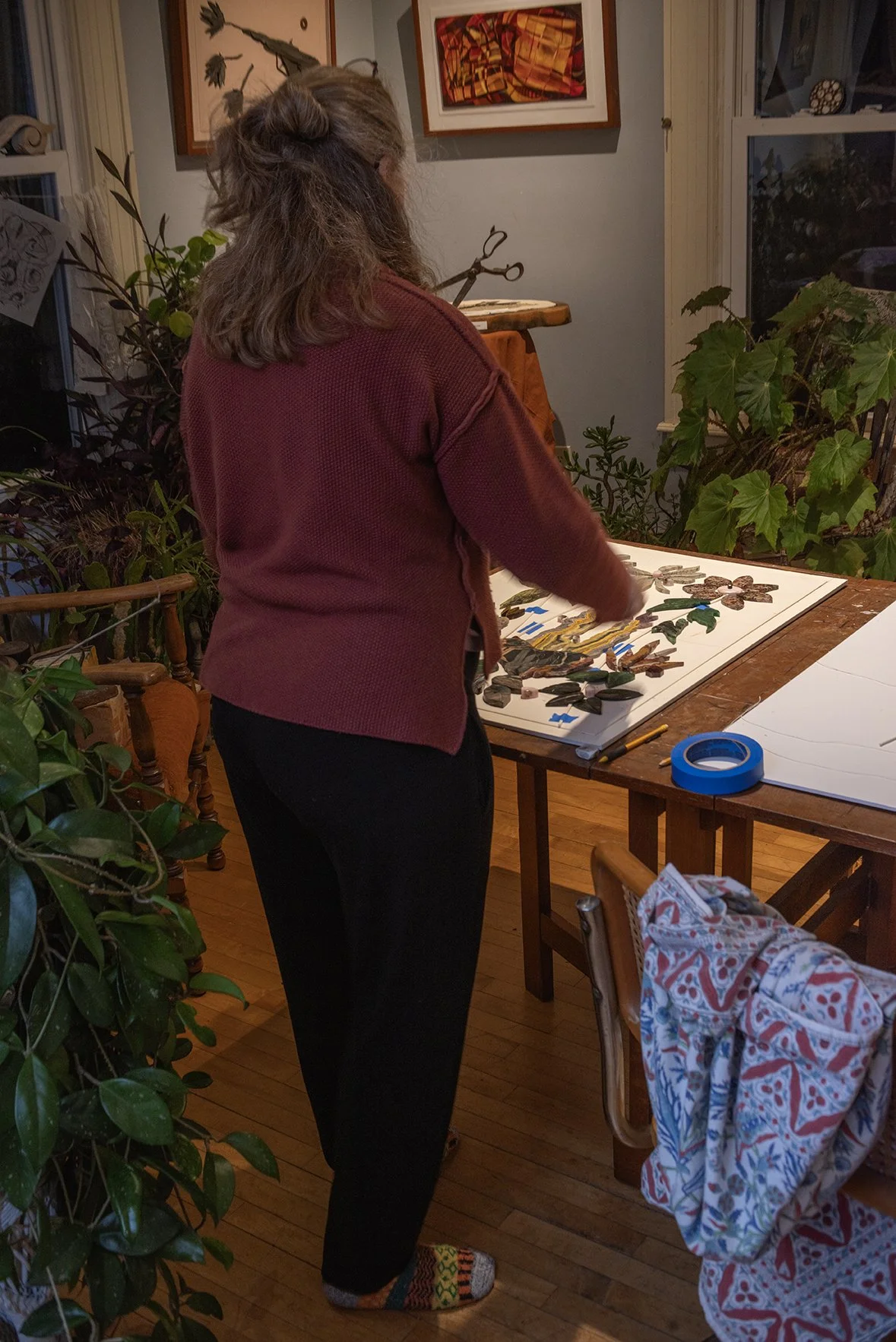
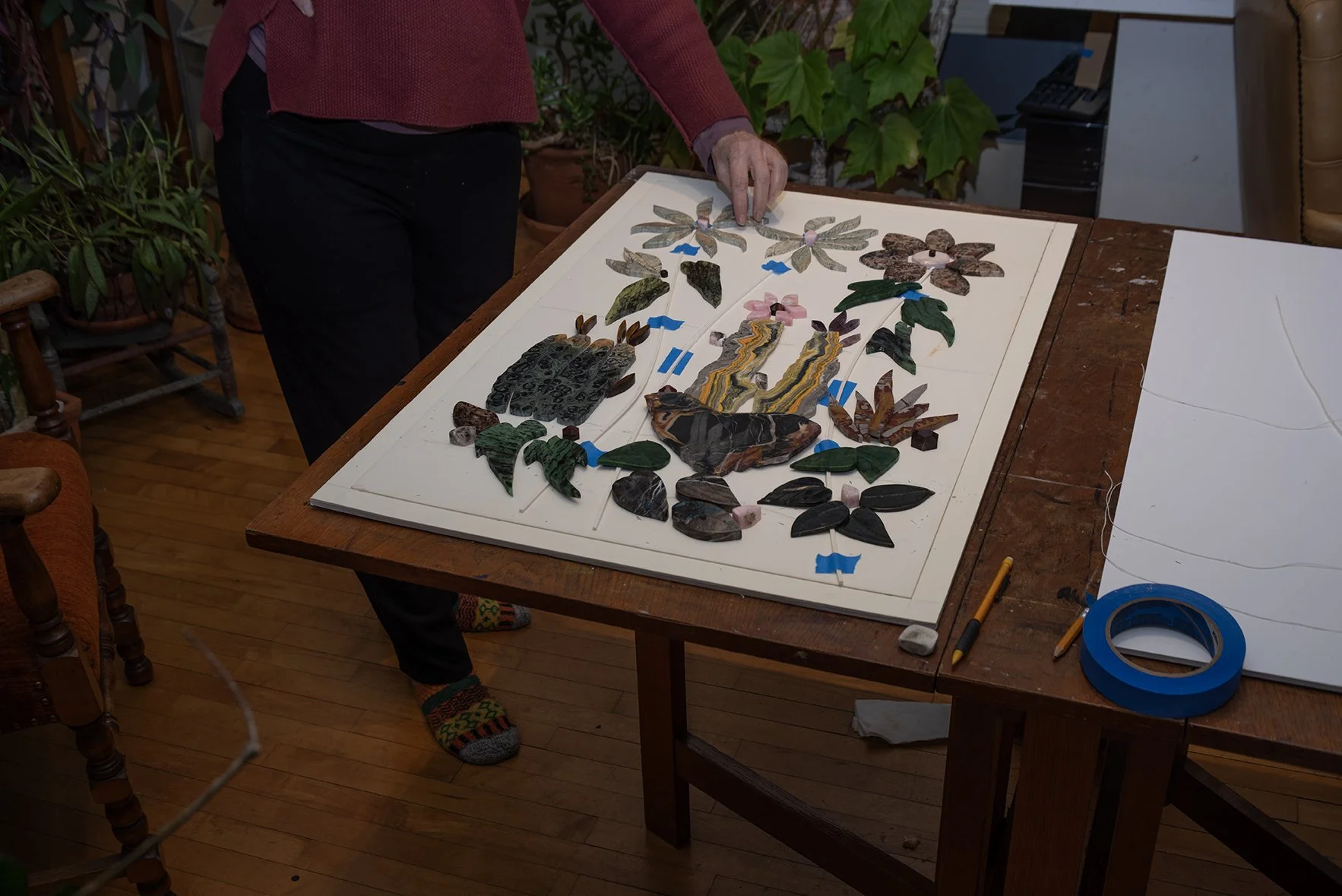
The flower stems are thin, two-layered strips of board glued to the floating panel. They will appear as high-relief elements once the panel's linen lining is complete. There will also be low-relief effects (longitudinal cuts done on the float) to help generate a sense of depth in the piece.
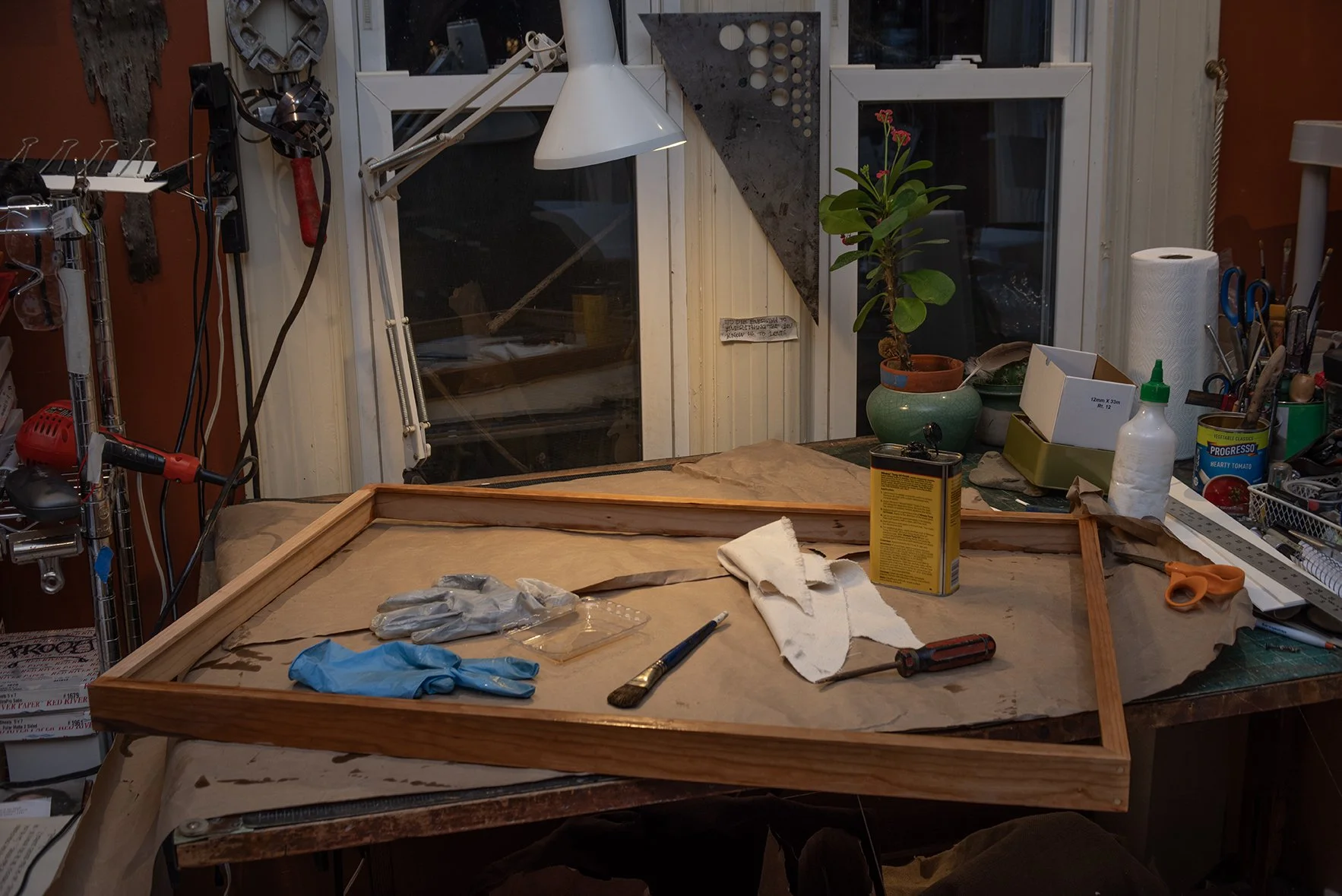
The cherry frame has been cut and assembled and is here receiving the first of two coats of tung oil.
Be well, Fernando
Second Progress Report
Hello, Mark
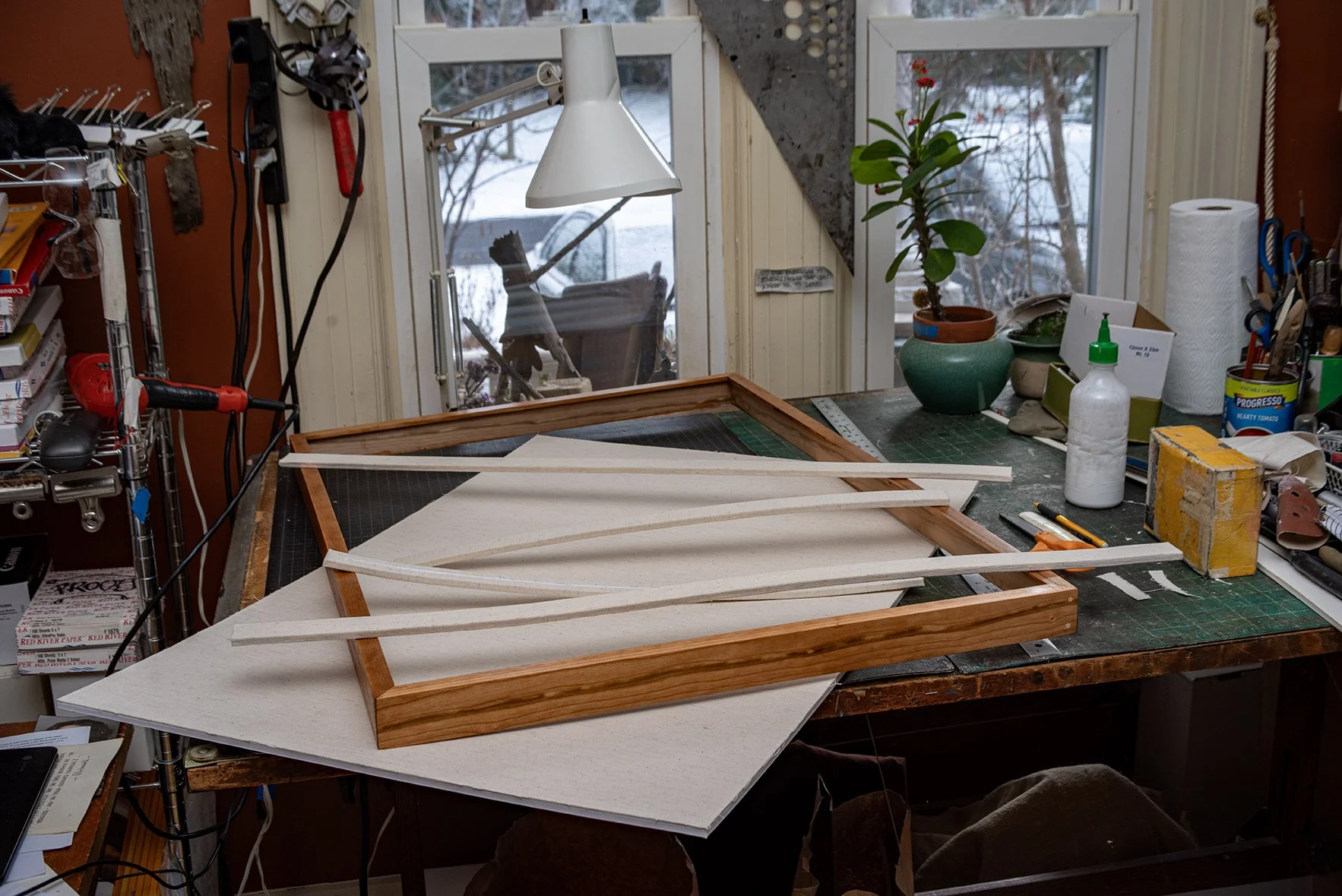
The shadow box is now fully varnished, and the two-layered sides are cut and ready to be lined.
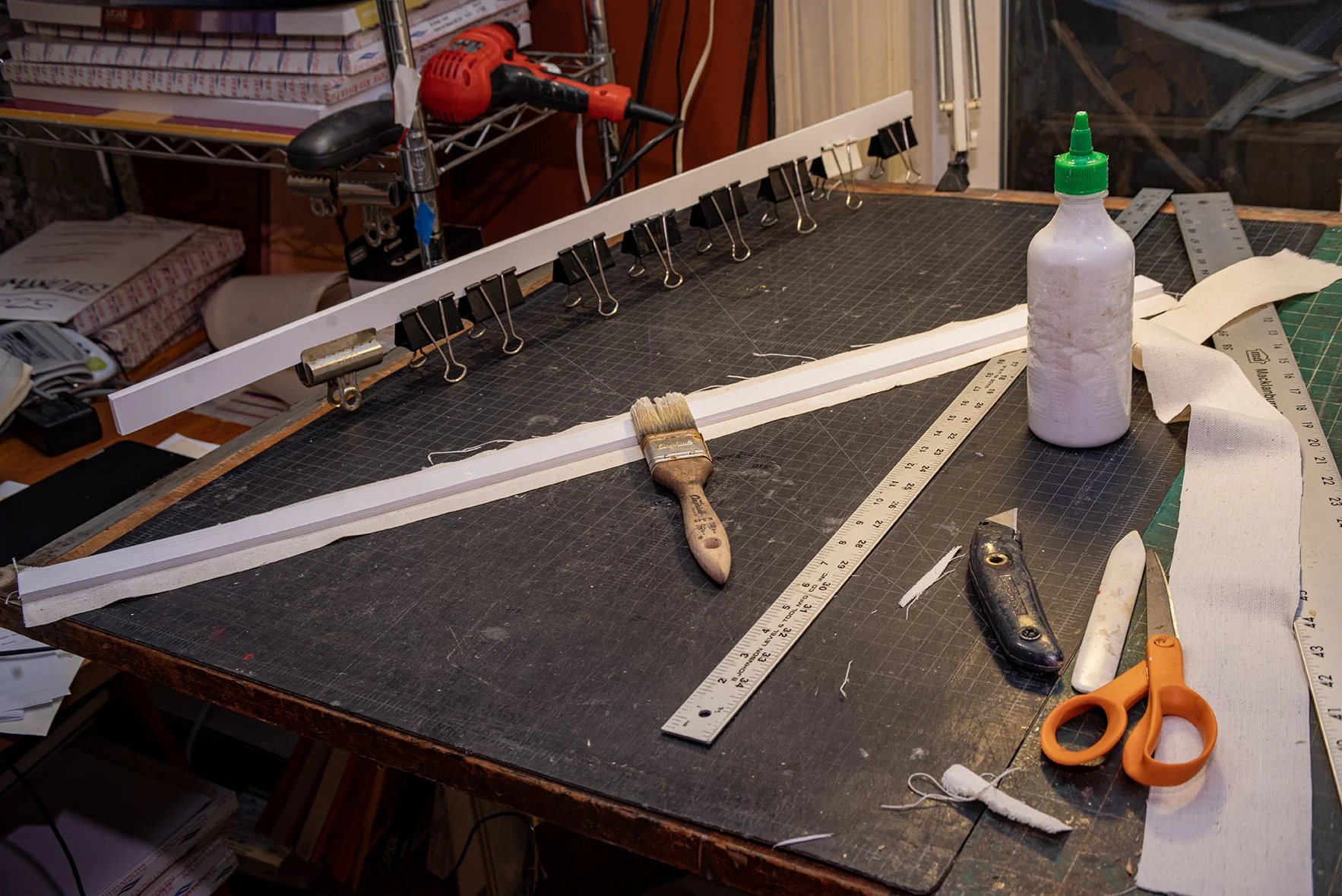
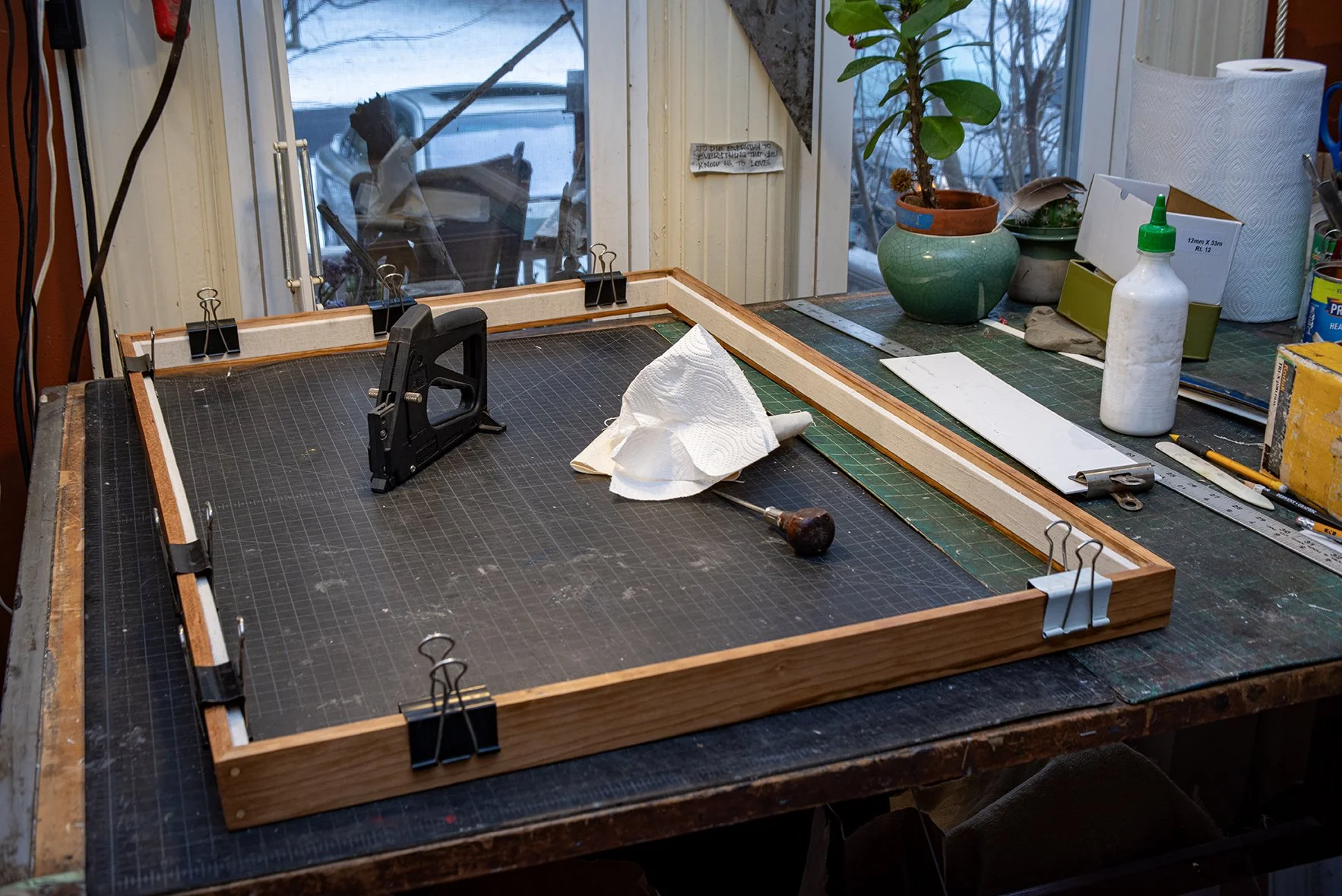
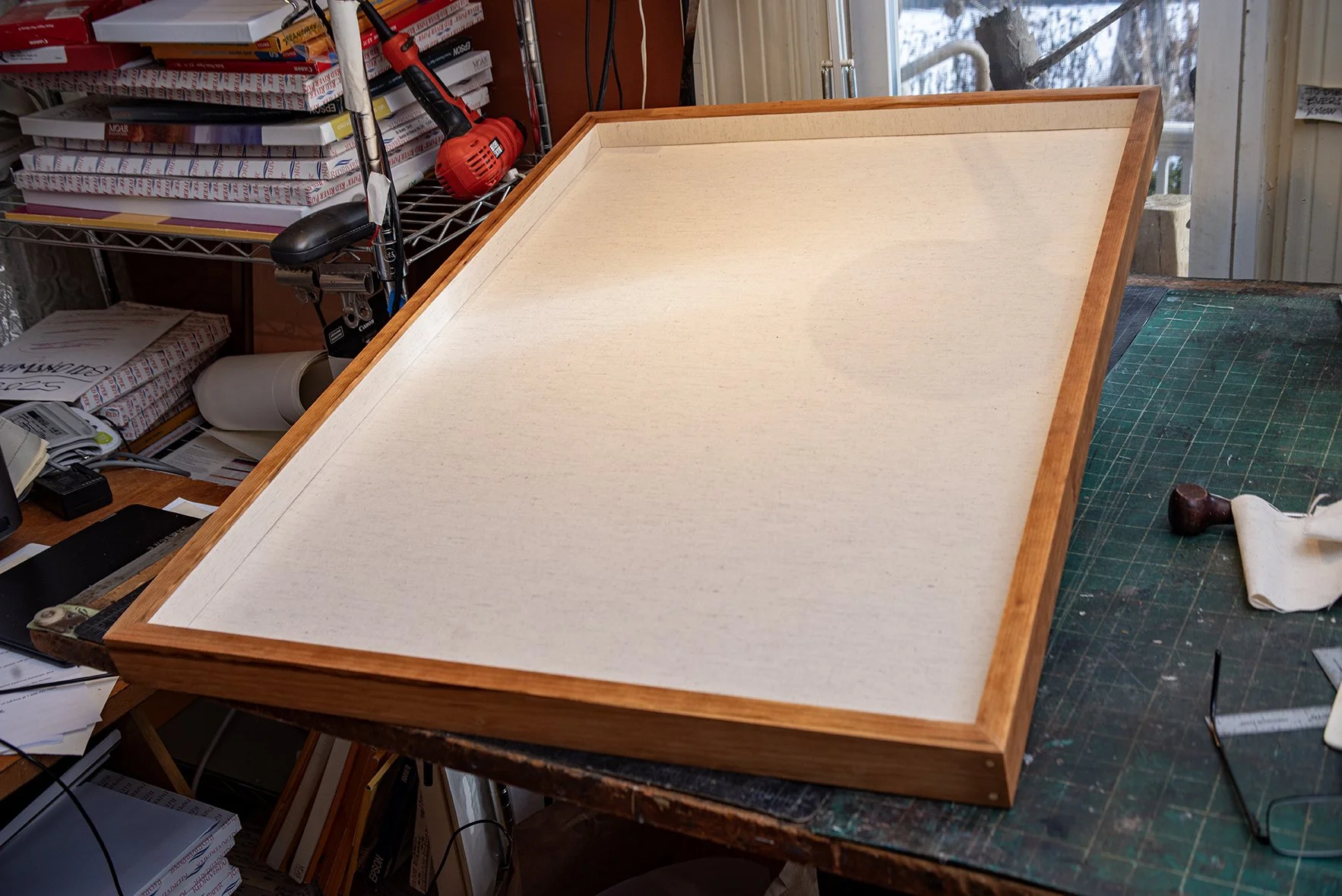
The lining process: The sides of the frame are seen here being attached to the lined sides. When the sides and the backboard are in place, the shadowbox (24.5 x 35") will be ready to receive the float bearing the art.
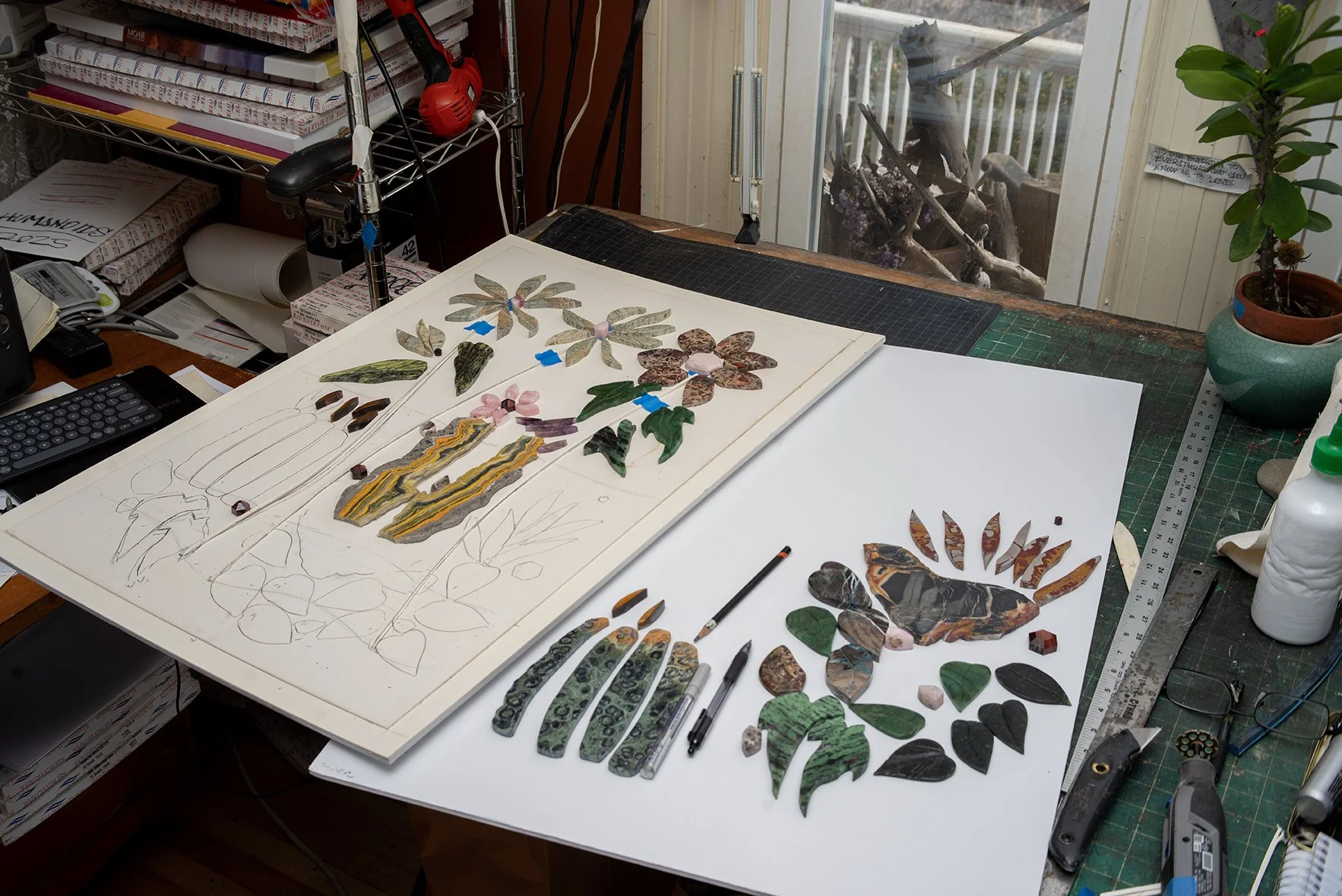
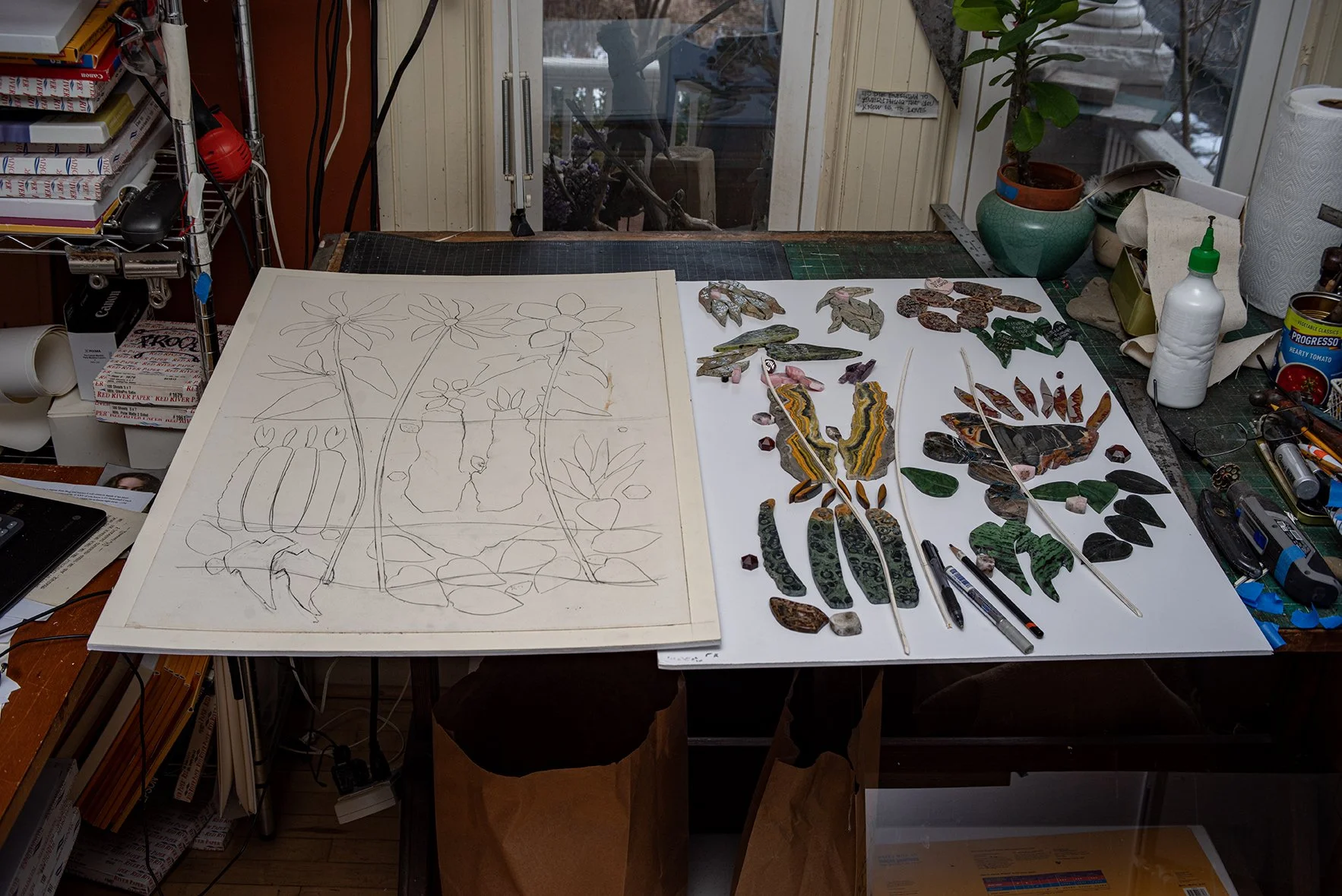
As each element's outline is traced in pencil, it migrates back to the dummy. The carving of the panel can begin now that the outlines are completed.
Good night! Fernando
Third Progress Report
... we are still looking for an appropriate title for this piece; all five illegals responsible for it can propose one, you, Mark, get to both propose and choose the finalist.
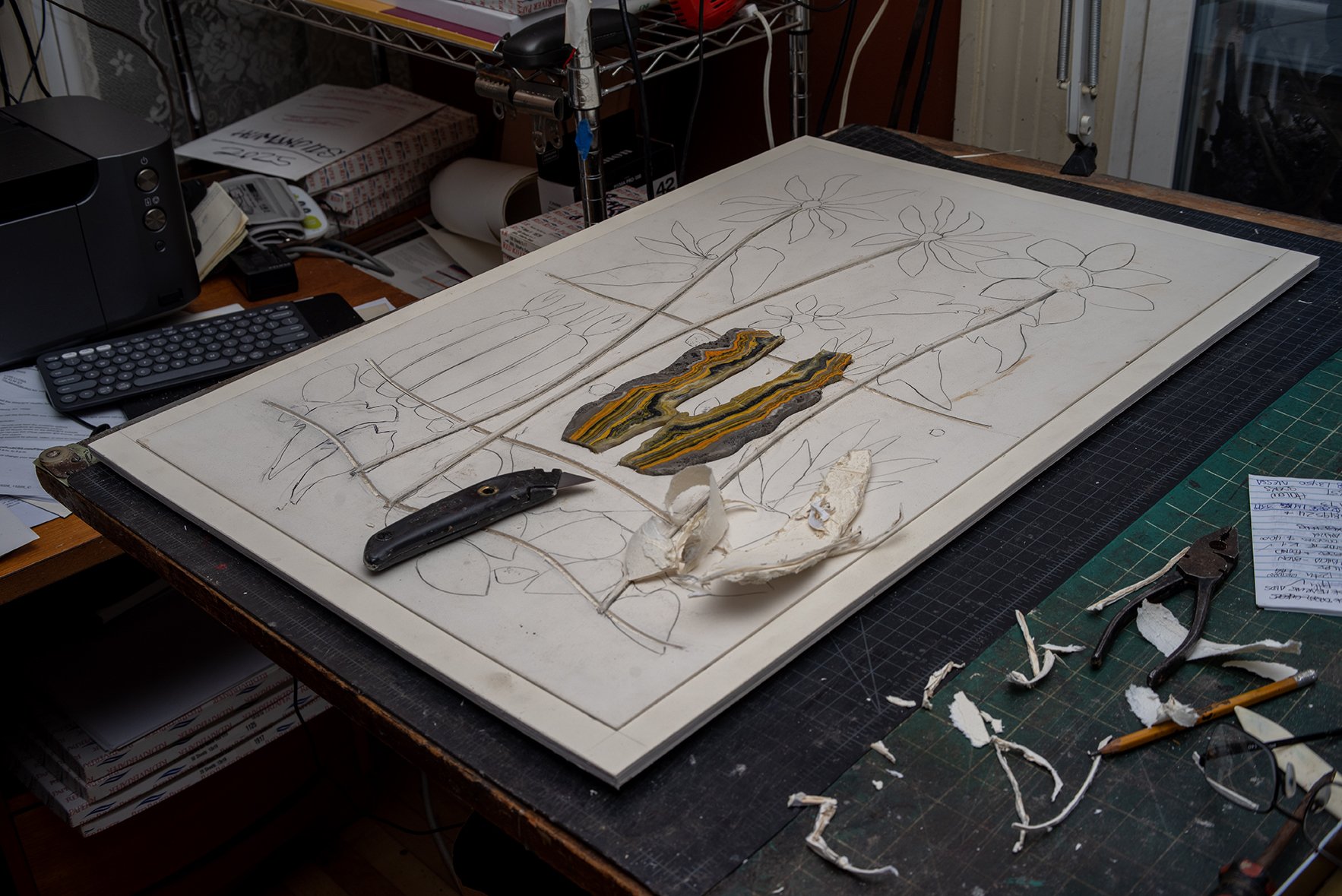
The carving of the panel begins
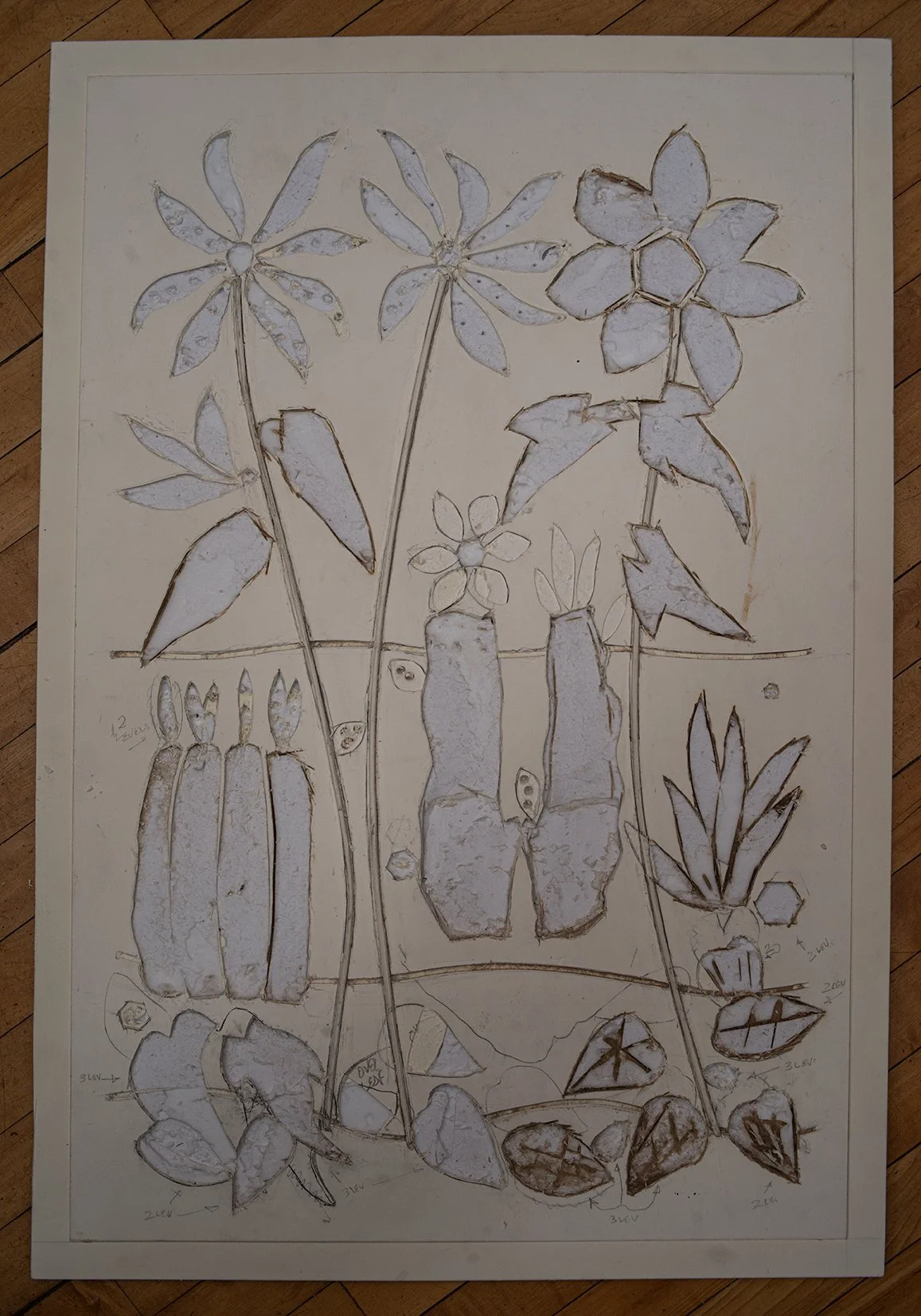
The carving is nearly finished in this view.
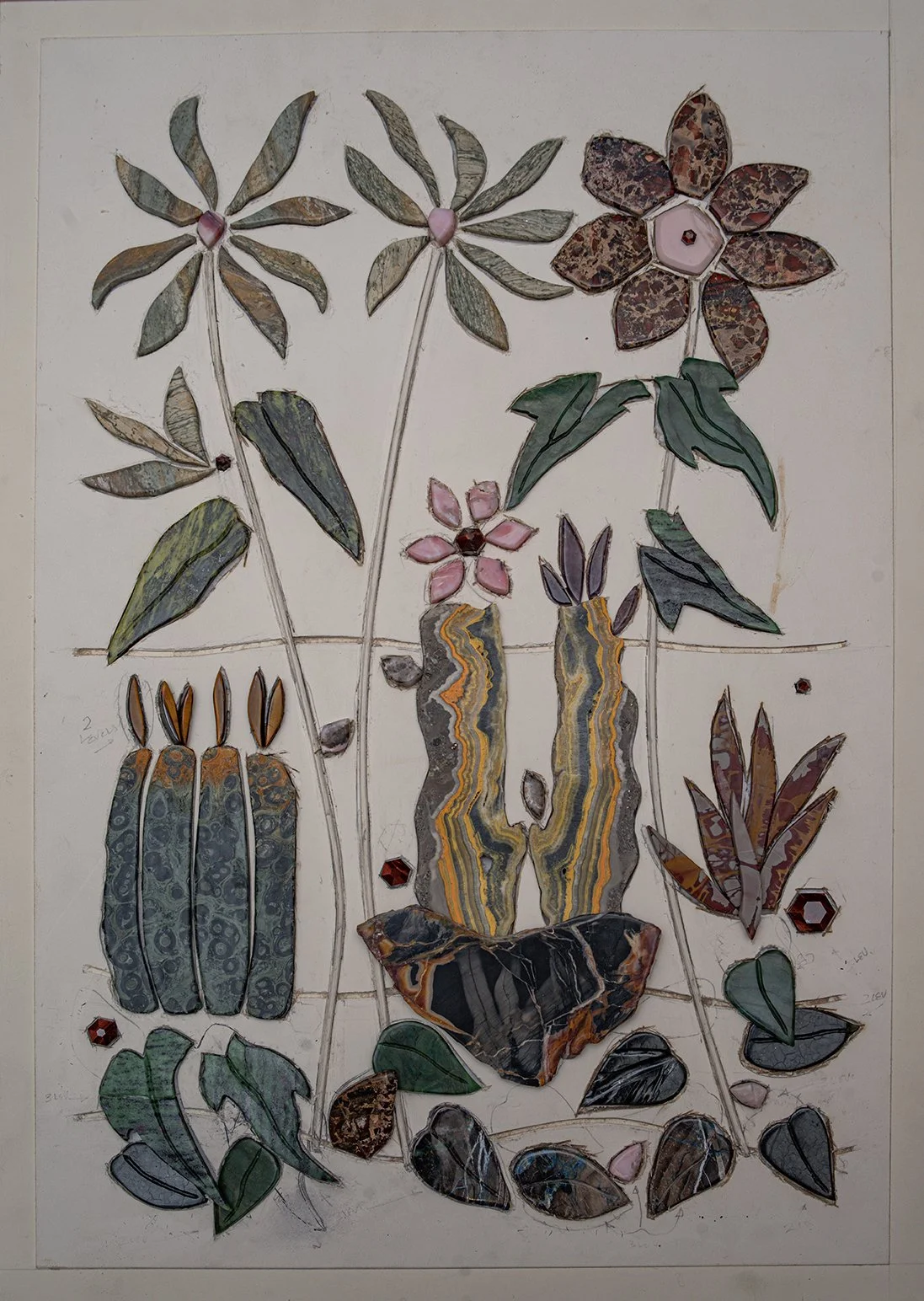
All 87 (+/-) elements are shown here, each placed in its niche cut into the float panel. You can see some last-minute placement modifications made in close consultation with Kim, mostly at the bottom, made to improve the general design. I am testing today how well the elements fit; you can see that three of them overlap with others. Most of the petals are cantilevered to give some impression of movement. All the niches count with a little space all around to give room to the fabric that will line the panel. Next, I will carefully sand the edges of every niche, which is important for proper lining and subsequent fitting.
Over the next two days, I'll be working on the lining of the panel, the secure placement of the elements, and, last of all, floating the art panel into its shadowbox.
Be well, Fernando and Kim
Fourth and Final Progress Report
Hello, Mark,
The production process was prolonged by unforeseen fitting demands.
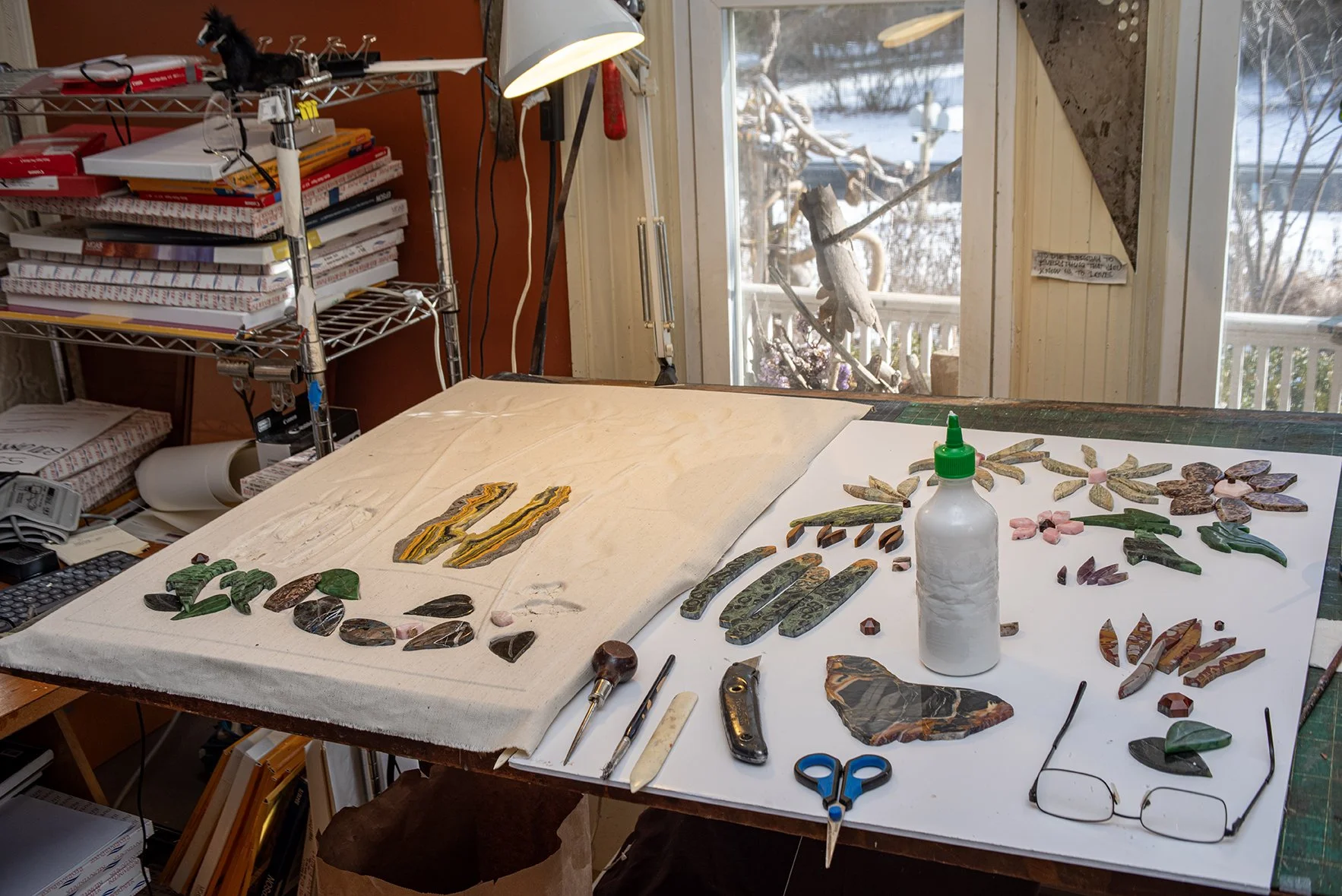
The float panel is now fully covered with very fine linen, and I've started the laborious process of cutting, folding under, and gluing the linen within every niche to give all the elements their proper, tight fit.
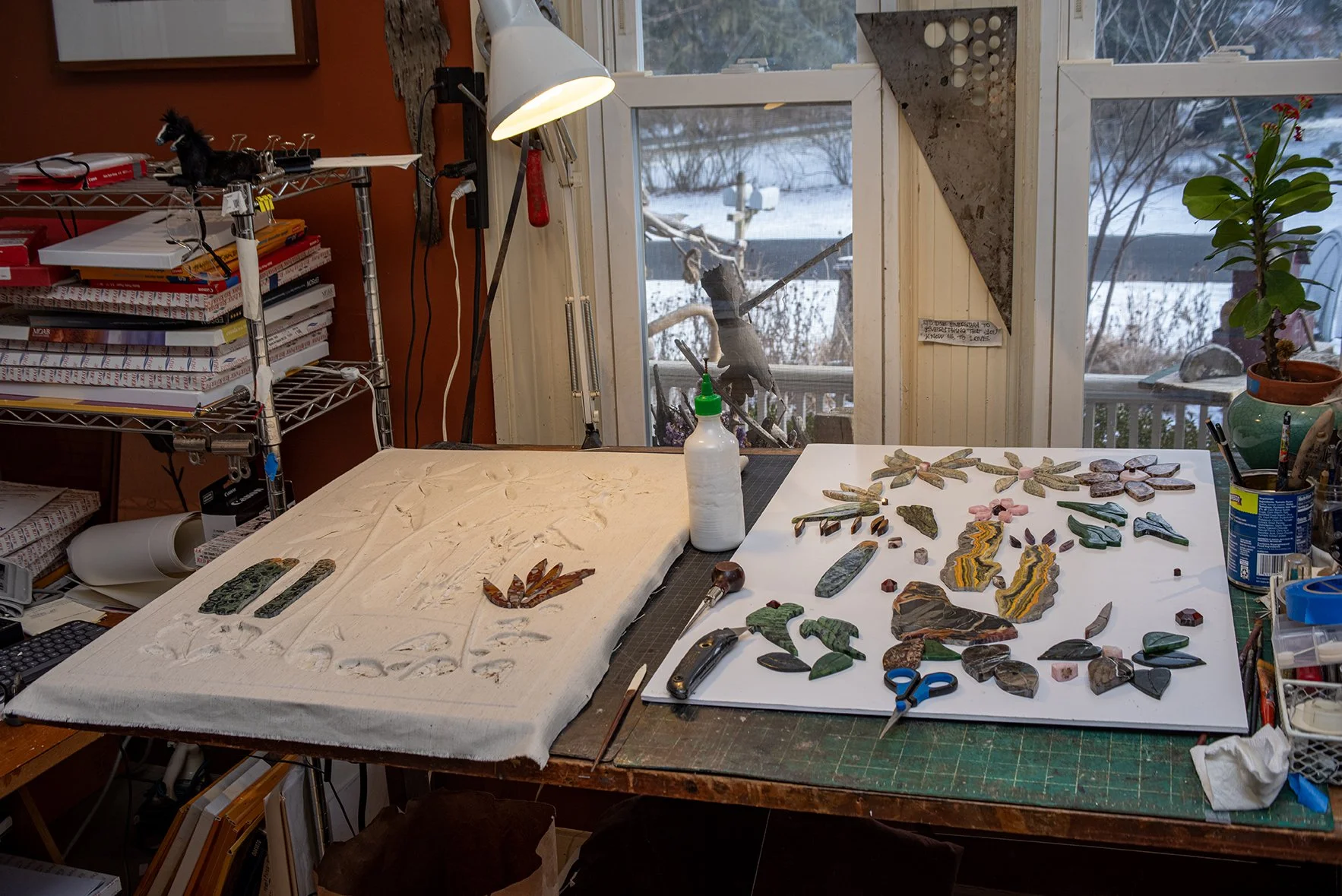
At this point, each of the 87 niches is ready, and I am making final adjustments to secure a tight embrace to each component, height, depth, inclination, and cantilever.
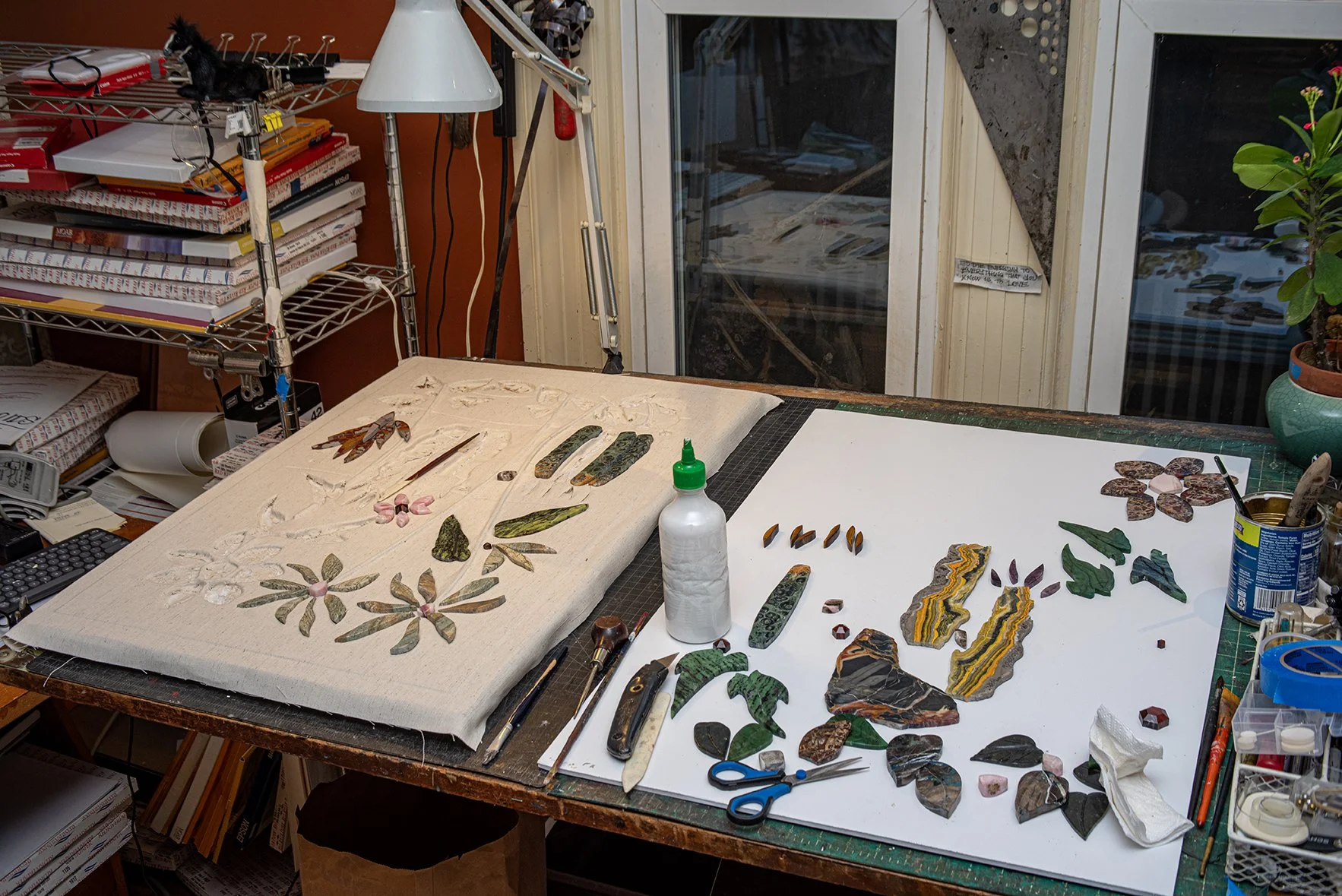
I'm here, a third of the way through the task of gluing and embedding each element. I use PVA (Polyvinyl Acetate) on both surfaces to secure most of them, and thick, two-part epoxy on the heavier and more protruding ones.
Last night I finished this task. This morning, everything seems firmly attached, so I will proceed to glue the linen along the borders of the art panel to, finally, attach it to the waiting shadowbox. I think it might be ready for pickup tomorrow afternoon.
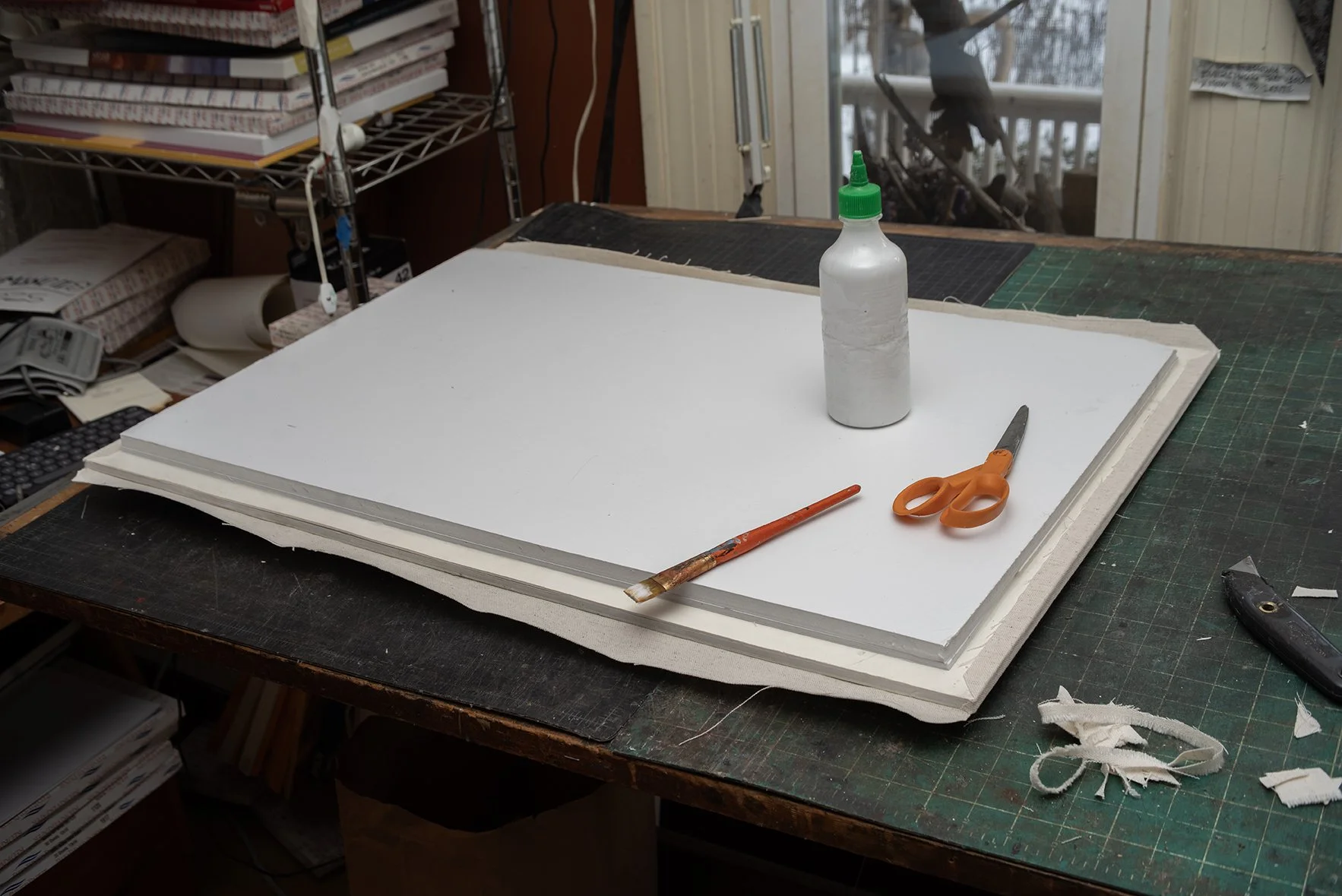
The linen is carefully attached to the sides of the panel, perfectly straight sides and clean corners are essential to the final look of the piece.
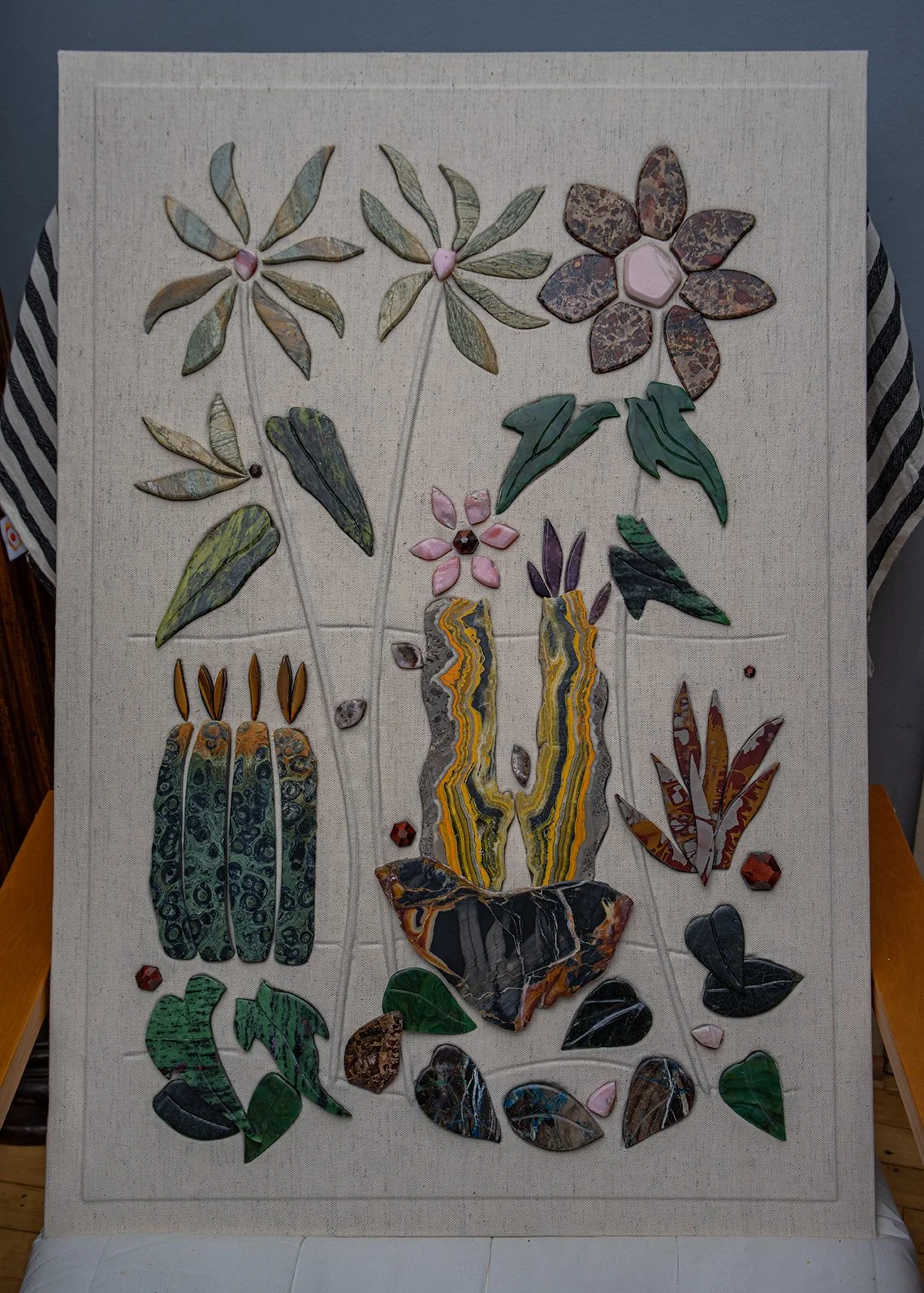
The art panel ready to float home
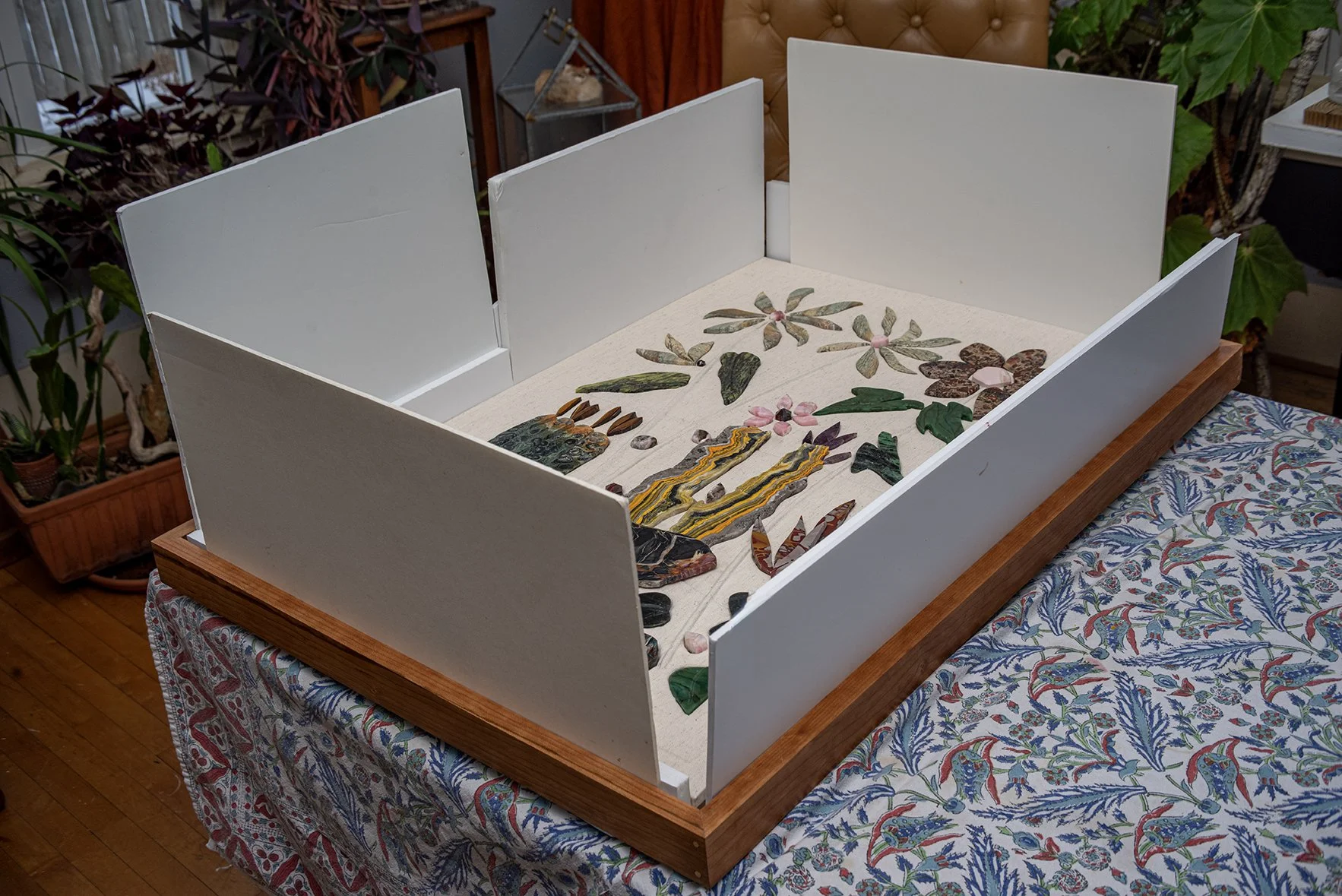
The side boards serve to perfectly position the floating panel at the center of the shadowbox during the gluing period.
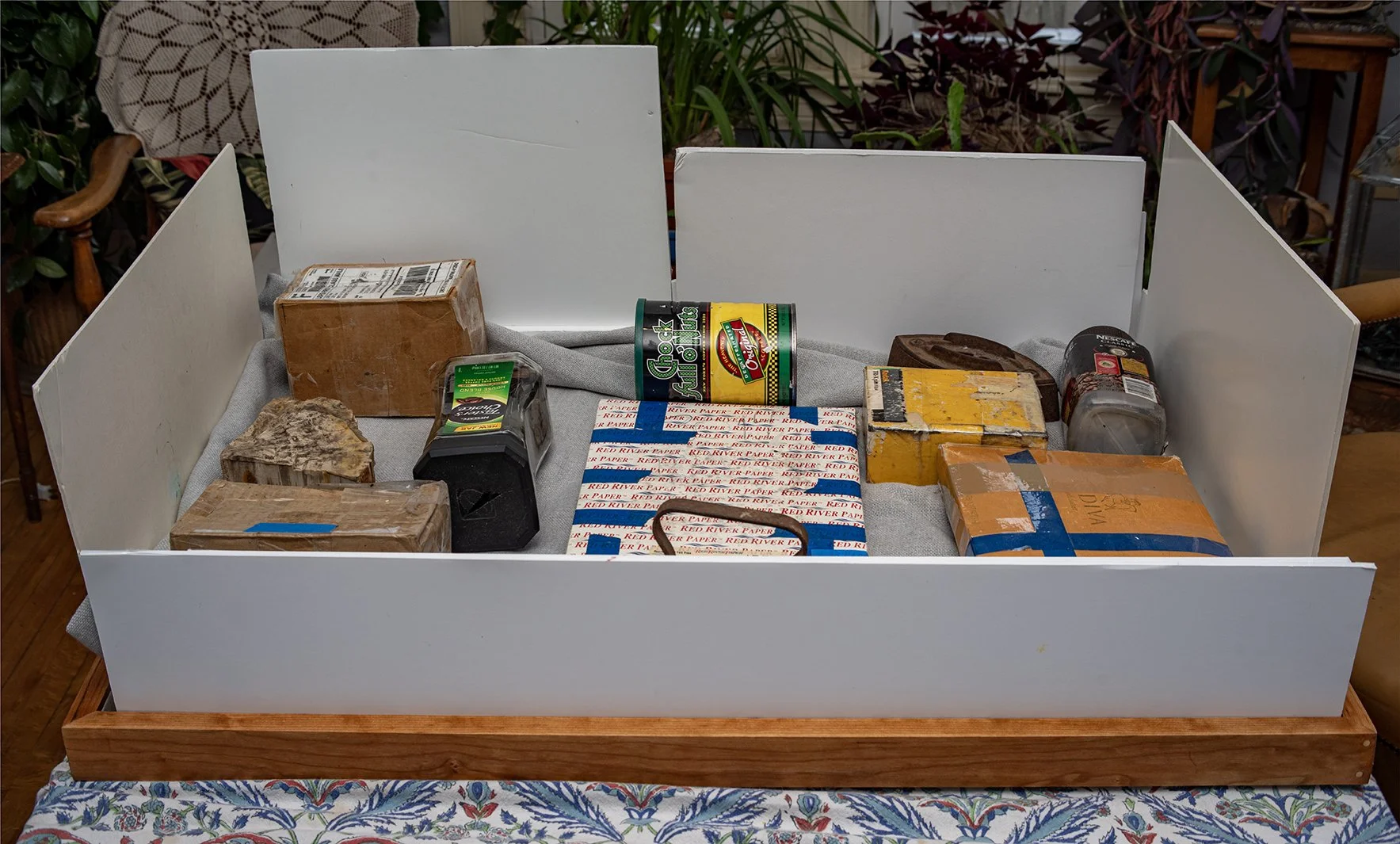
The weights will remain overnight, and come mornig I will further secure the panel with 6 metal screws
Mark, I need confirmation of a title. " Garden Delirium" seems a bit too Tremens (Delirium tremens (DTs) (“…a severe, life-threatening form of alcohol withdrawal causing rapid-onset confusion, hallucinations, severe tremors, and autonomic hyperactivity (high blood pressure, heart rate” (!)). Kim suggests a far more sober "Rock Garden" appellation. Any other possibility?
Be well, Fernando
To this last report, Mark responded as follows:
“Hello Fernando,
Thank you for the update and your heroic efforts (Kim included).
I would like to combine Kim’s, yours, and my ideas for names into one title, but I am open to suggestions. Title Suggestion: “Orto Botanico Lapidaria Delirio” - The Italians are known for their history and artistry of lapidary creations.”
Best regards, Mark
Kim and I felt Mark’s title suggestion was apt (aptly weird), so we signaled for him to come the next day to pick up the piece. He announced it would be a gift for Heidi, his loving wife. He also paid Kim for her crucial role in the collaboration, covered my investment in materials, and was generous enough to pay for what he considered an amount of work on my part that exceeded the little debt that provoked this crazy, complicated venture, which I hope you have enjoyed learning about.
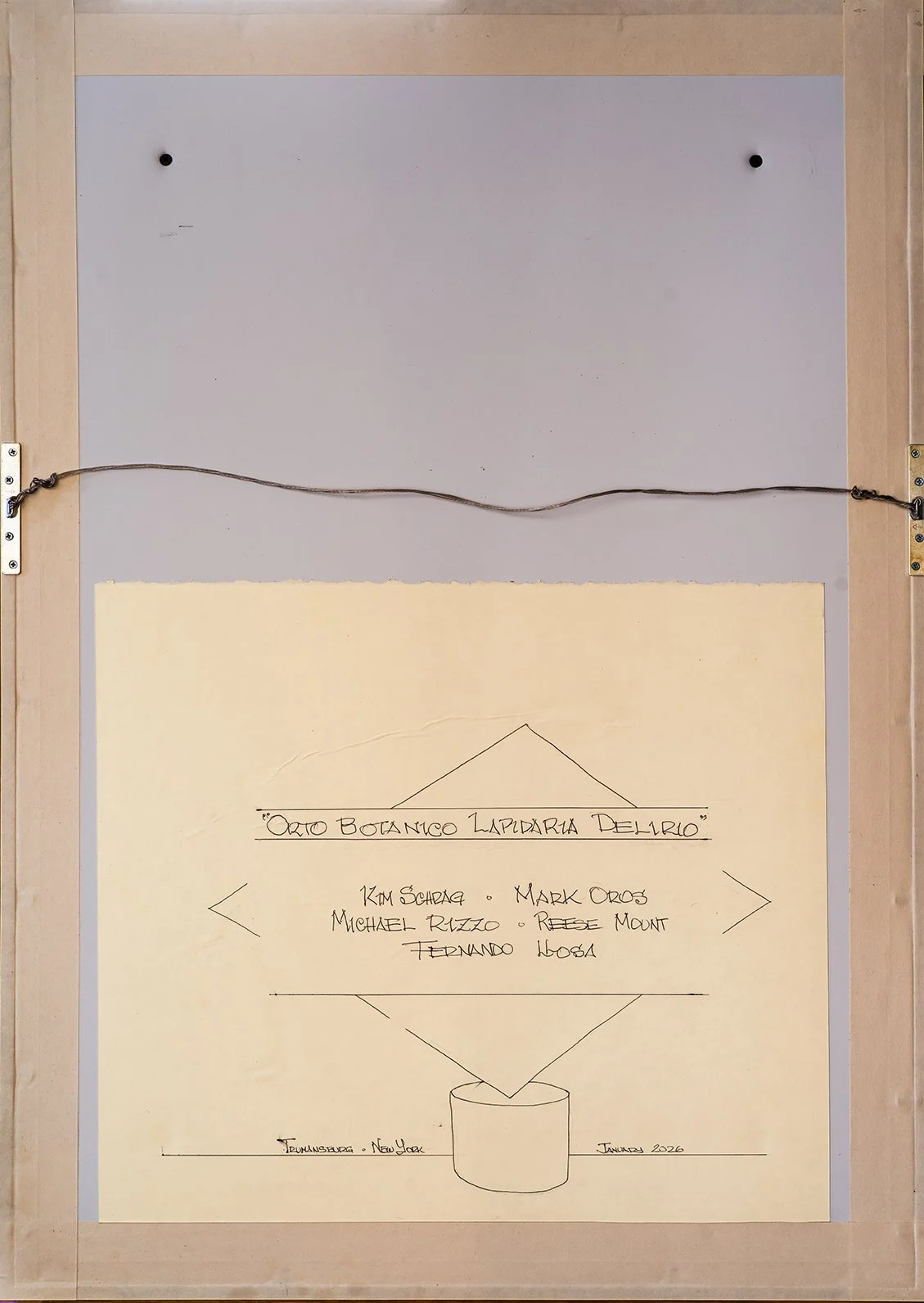
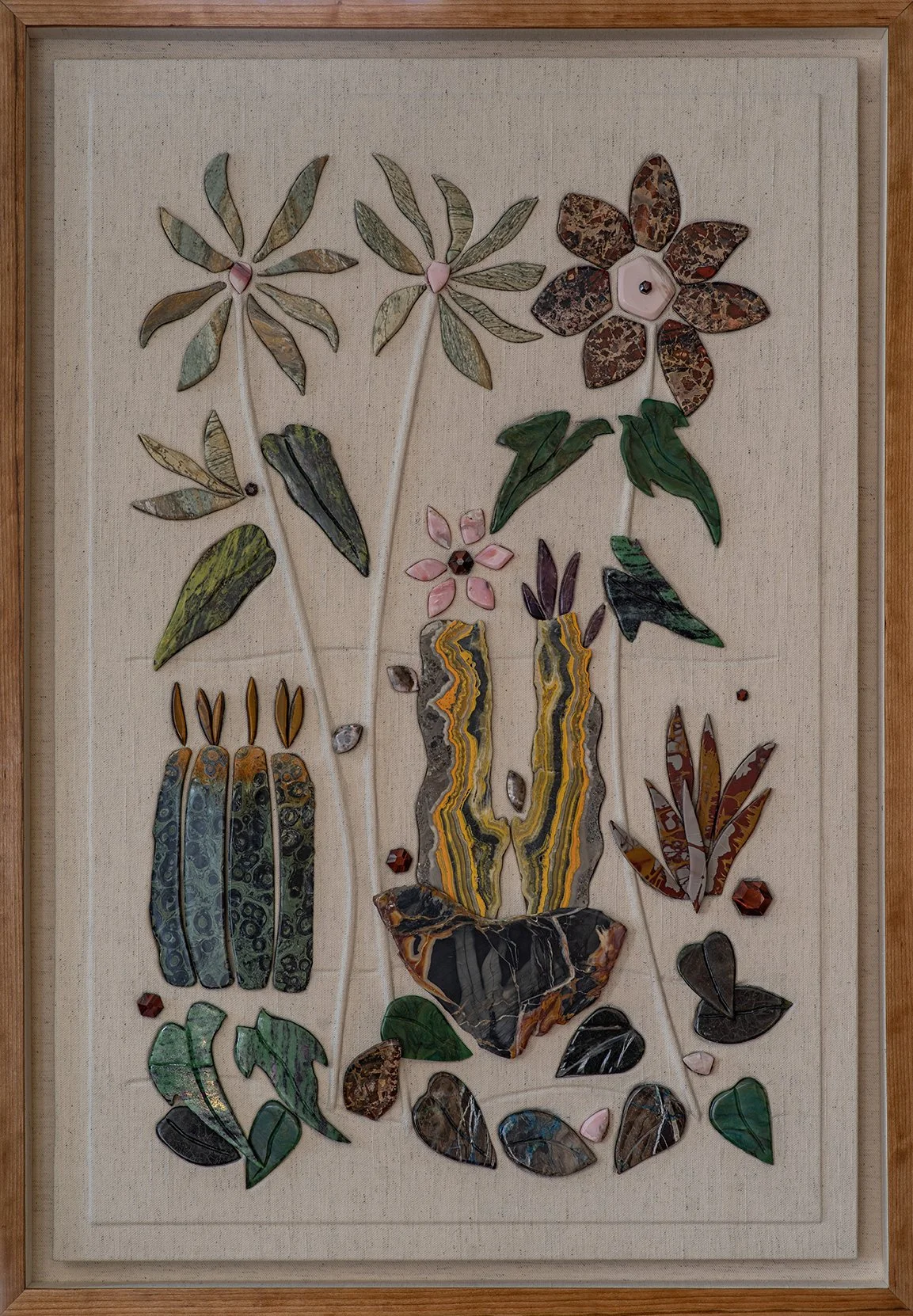
The final appearance of Orto Botanico Lapidario Delirio